

Vanilla Bean Crème Brûlée Cheesecake Cupcakes combine three irresistible textures in one elegant individual dessert: a buttery graham cracker crust, silky vanilla-speckled cheesecake, and a paper-thin caramelized sugar shell that cracks beneath a spoon. They look like something from a pastry case, yet the small format is easier to bake and serve than a full cheesecake.
The cheesecakes can be prepared and chilled a day ahead. Just before serving, remove the liners, sprinkle the cold tops with sugar, and caramelize them with a kitchen torch. That last-minute step creates the contrast that makes classic Crème Brûlée so memorable: cool custard beneath warm, brittle caramel.
Why These Mini Cheesecakes Work
- Individual portions: No slicing is required, and every guest gets a perfect caramel top.
- Real vanilla flavor: Vanilla bean paste supplies both a rounded aroma and beautiful dark specks.
- Make-ahead convenience: Bake and chill the cheesecakes before the day of serving.
- Three distinct textures: Crisp crust, creamy filling, and crackly sugar make every bite interesting.
- Easy presentation: The shiny brûléed surface needs almost no garnish.
Unlike cake-style Cheesecake Cupcakes, these are miniature baked cheesecakes rather than sponge cupcakes with filling. Their polished size is similar to a generous Petit Four, but the method uses an ordinary muffin pan and paper liners.
Ingredients That Create the Best Texture
Graham cracker crumbs: Finely crushed crumbs pack into an even, sturdy base. Melted butter, a little sugar, and salt help the crust hold together while keeping it pleasantly crisp.
Full-fat brick cream cheese: Use the firm blocks rather than whipped spread from a tub. Bring the cheese completely to room temperature so it blends without lumps.
Sour cream and heavy cream: Sour cream adds tang and tenderness; a small amount of heavy cream makes the filling especially smooth. Room-temperature ingredients combine faster, which helps avoid overmixing.
Vanilla bean paste: Paste is convenient and gives a strong vanilla aroma with visible seeds. You may substitute the seeds from one vanilla bean plus a teaspoon of vanilla extract.
Fine granulated sugar: Regular granulated sugar works for both the filling and topping. For the brûléed layer, an even, thin coating melts more consistently than a thick pile.
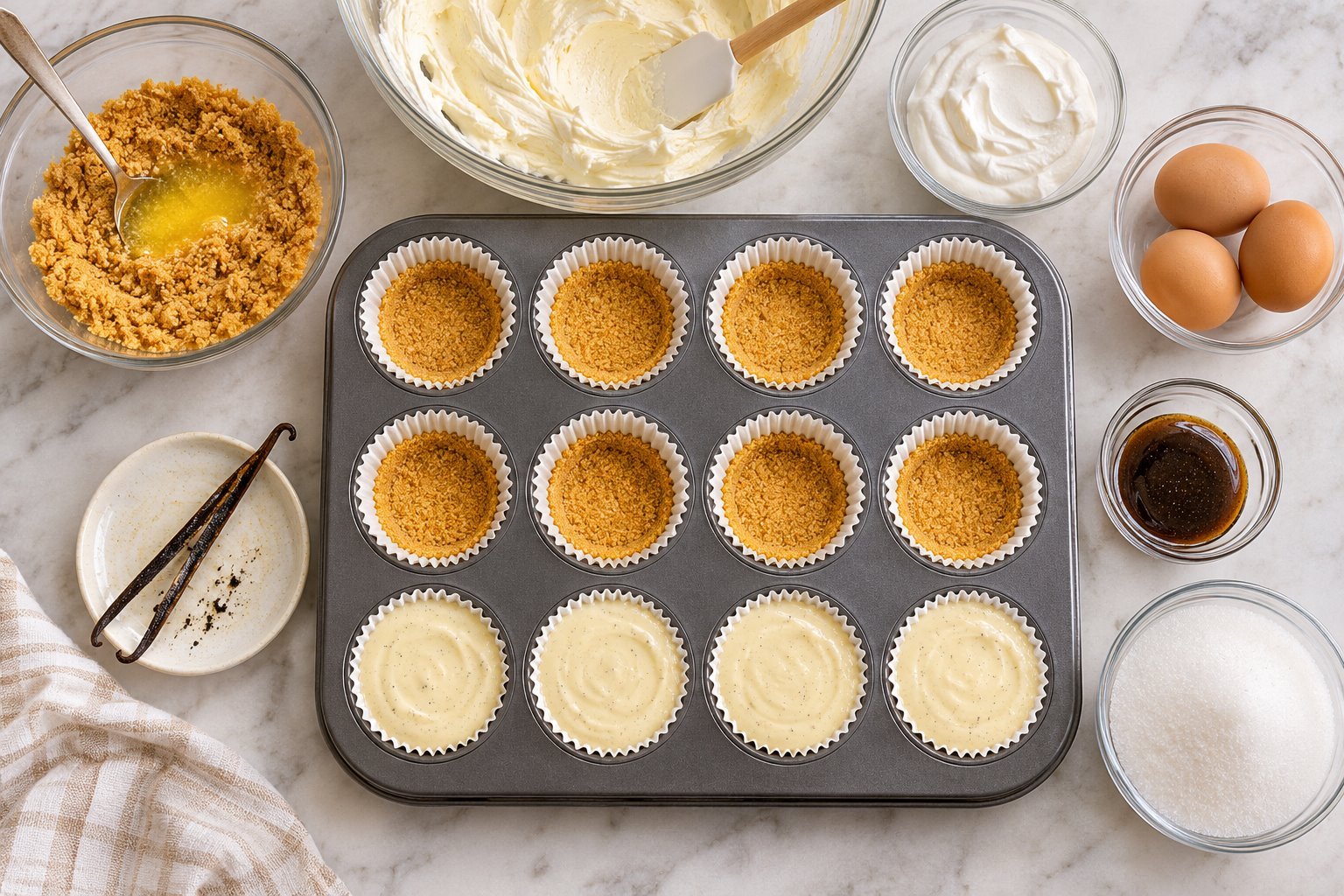
How to Make Vanilla Bean Crème Brûlée Cheesecake Cupcakes
1. Prepare and prebake the crusts
Heat the oven to 325°F (160°C) and line a 12-cup muffin pan. Mix graham crumbs, melted butter, sugar, and salt until the crumbs look evenly damp. Add a heaping tablespoon to each liner and press firmly with the flat bottom of a small glass or measuring cup. Bake for five minutes, then reduce the oven to 300°F (150°C).
2. Mix the filling gently
Beat the softened cream cheese and sugar on low speed just until smooth. Scrape the bowl thoroughly. Add the eggs one at a time, mixing only until each disappears. Blend in sour cream, heavy cream, vanilla bean paste, and salt. Low speed prevents excess air, which can make the cakes rise, collapse, or crack.
3. Bake until barely set
Divide the filling among the warm crusts. Gently tap the pan on the counter to release large bubbles. Bake for 20 to 24 minutes. The edges should look set, but the centers should still wobble slightly when the pan is nudged. Avoid waiting for browning; the cheesecakes finish setting as they cool.
4. Cool and chill
Turn off the oven, crack the door, and leave the pan inside for 10 minutes. Move it to a rack and cool completely. Refrigerate the cupcakes for at least four hours or overnight. They must be thoroughly cold before the sugar is torched.
5. Create the crackly caramel tops
Remove the paper liners and place the cold cheesecakes on a flame-safe metal baking sheet. Blot any moisture from the tops. Sprinkle each with about one teaspoon of sugar and tilt gently to create an even layer. With flammable items cleared from the area, hold a kitchen torch two to three inches away and move the flame continuously until the sugar bubbles and turns amber. Let the caramel harden for two minutes.
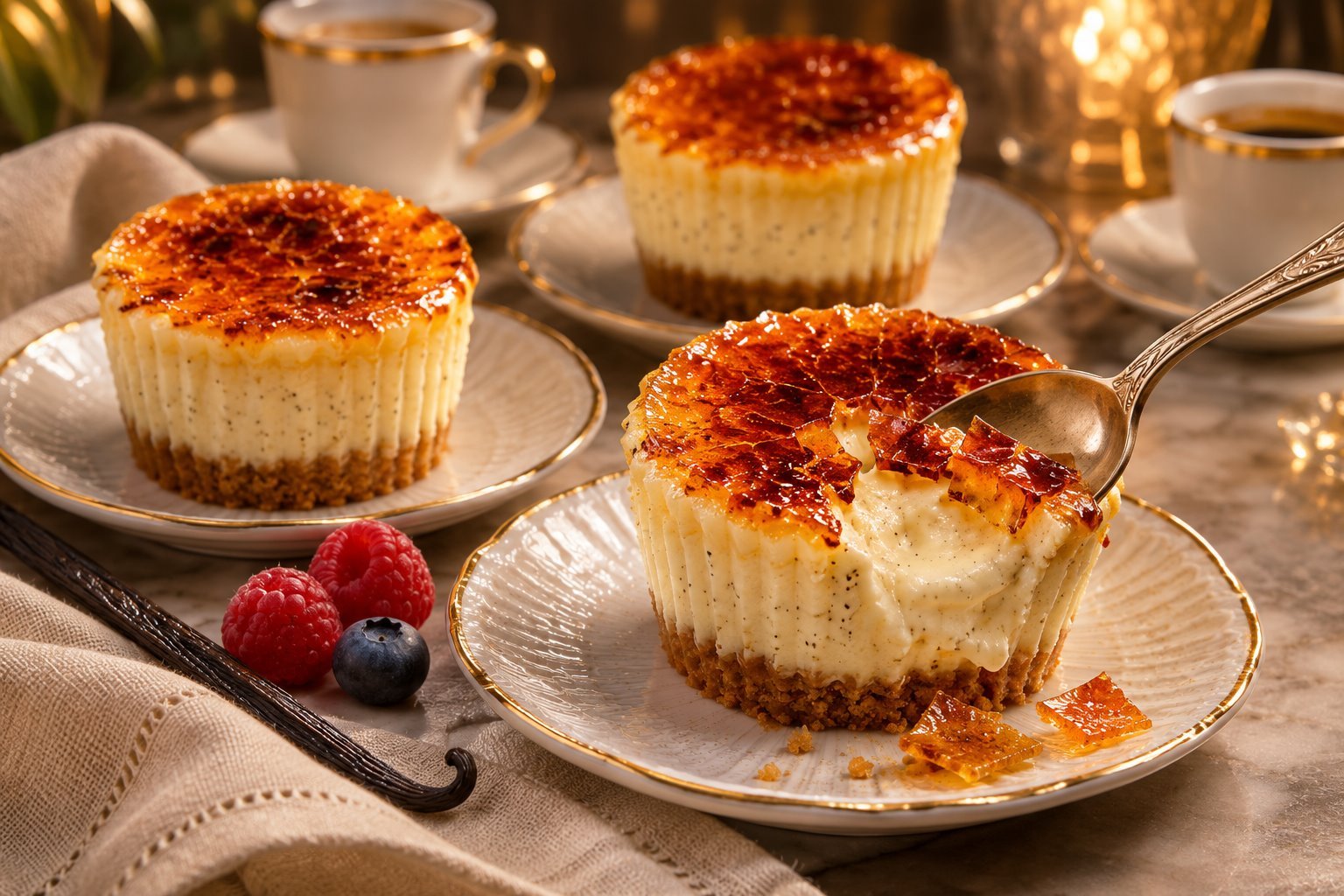
Secrets to Smooth, Crack-Free Cheesecake
- Bring cream cheese, eggs, sour cream, and cream to room temperature before mixing.
- Scrape the bowl after beating the cream cheese so no dense lumps hide at the bottom.
- Mix on low speed once the eggs are added.
- Do not overbake; a small center wobble is correct.
- Cool gradually before refrigeration.
- Chill fully before removing liners and caramelizing the tops.
These details are useful across many Cupcake Recipes, but they matter especially for cheesecake because trapped air expands in the oven. Small surface dips are not a problem; they actually provide a level place for the sugar.
How to Get a True Crème Brûlée Crack
The best Creme Brulee Cheesecake topping is thin, even, and deeply amber—not black. Dry surfaces caramelize better, so blot away condensation first. Fine sugar melts quickly; one teaspoon per cupcake is usually enough. Keep the torch moving in small circles and stop as soon as the surface reaches a rich amber color. The sugar continues darkening briefly from residual heat.
If you do not own a torch, place the cold, unlined cheesecakes on a metal tray and set them briefly under a very hot broiler. Watch continuously and rotate the pan as needed. This method may warm the filling more than a torch, so refrigerate the cakes again for a few minutes if necessary.
Serving Ideas and Variations
Serve the cupcakes as soon as the caramel hardens. A few raspberries or a tiny curl of orange zest can add color, but elaborate decoration hides the glossy top. Coffee, espresso, or unsweetened tea balances the rich vanilla filling.
For citrus cheesecake, add one teaspoon of finely grated lemon or orange zest. For chocolate, stir two ounces of cooled melted white chocolate into the filling and reduce the sugar slightly. Keep the vanilla in both versions so the brûléed flavor remains rounded.
These elegant portions suit a dessert buffet filled with Sweet Snacks Recipes, a bridal shower, or a holiday dinner. The dramatic crack invites a playful “Let Them Eat Cake” moment, while the familiar flavors make them pure Yummy Food Dessert comfort.
Readers searching for a Recette Santé should note that this is an indulgent dessert rather than a health-focused recipe. The miniature size does, however, make portions easy to plan and serve.
Make Ahead and Storage
Bake the cheesecakes up to two days ahead and store them covered in the refrigerator with their liners attached. Remove the liners and torch the sugar shortly before serving. Once caramelized, the tops are crispiest for about one hour; refrigerator moisture gradually softens the sugar.
Freeze the un-torched cheesecakes for up to one month in an airtight container. Thaw overnight in the refrigerator, blot away condensation, and add the sugar topping only after they are fully thawed and cold.
Frequently Asked Questions
Can I use vanilla extract instead of paste?
Yes. Use two teaspoons of pure vanilla extract. The flavor will still be excellent, though the filling will not have visible vanilla seeds.
Why did the sugar topping soften?
Caramel absorbs moisture from cheesecake and refrigerated air. Torch the tops as close to serving time as possible and avoid returning finished cakes to the refrigerator for long.
Do I need a water bath?
No. The small portions bake gently at a low temperature, so a water bath is unnecessary.
With a creamy vanilla center and a caramel shell that shatters beautifully, these miniature cheesecakes deliver a memorable finish to any celebration.
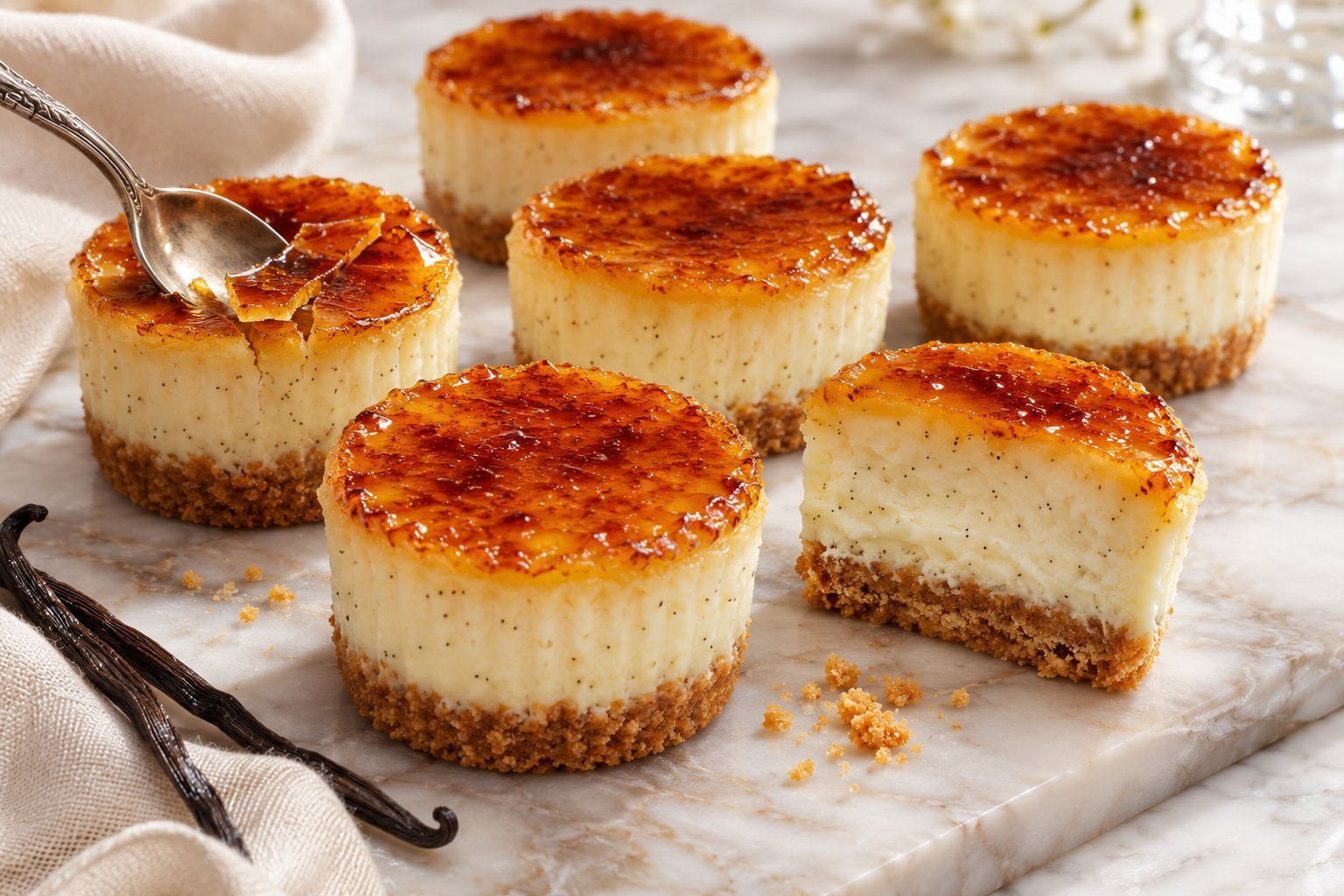
Vanilla Bean Crème Brûlée Cheesecake Cupcakes
Ingredients
Equipment
Method
- Preheat the oven to 325°F (160°C). Line a 12-cup muffin pan with paper liners.
- Mix graham crumbs, melted butter, 2 tablespoons sugar, and salt until evenly damp. Divide among the liners and press firmly into flat bases.
- Bake the crusts for 5 minutes. Remove the pan and reduce the oven temperature to 300°F (150°C).
- Beat softened cream cheese and 1/2 cup sugar on low until smooth. Scrape the bowl. Add eggs one at a time, mixing only until incorporated. Mix in sour cream, heavy cream, vanilla bean paste, and salt on low.
- Divide the filling evenly among the crusts. Tap the pan gently on the counter to release large air bubbles.
- Bake for 20 to 24 minutes, until the edges are set but the centers still wobble slightly. Turn off the oven, crack the door, and leave the pan inside for 10 minutes.
- Cool completely on a rack, then refrigerate for at least 4 hours or overnight.
- Remove paper liners and place the cold cheesecakes on a flame-safe metal baking sheet. Blot moisture from the tops. Sprinkle about 1 teaspoon sugar evenly over each.
- Clear flammable items from the area. Hold a kitchen torch 2 to 3 inches above the surface and move continuously until the sugar bubbles and turns amber. Let harden for 2 minutes and serve promptly.
Notes
- Use room-temperature dairy and eggs for the smoothest filling.
- Do not overmix after adding eggs.
- Chill the cheesecakes completely before caramelizing.
- Remove paper liners before using a torch and work on a flame-safe metal tray.
- Torch sugar shortly before serving; moisture softens the caramel over time.
- Total time includes 4 hours of chilling.
- Nutrition is an estimate.


