Healthy Sesame Chicken brings the sweet, savory flavor of a takeout favorite to a practical one-pan dinner. Tender chicken breast, crisp-tender broccoli, fresh ginger, garlic, and toasted sesame oil are coated in a glossy homemade sauce. There is no deep frying, and the entire skillet is ready in about 30 minutes.
Serve it with brown rice, quinoa, cauliflower rice, or extra vegetables for a flexible weeknight meal. The sauce is bold enough to feel fun and satisfying, but it uses everyday ingredients and lets you control the sweetness and sodium.
Why You Will Love This Healthy Sesame Chicken Recipe
Traditional restaurant sesame chicken often relies on battered, fried chicken and a generous amount of sugary sauce. This home-style version takes a different approach. The chicken is lightly dusted with cornstarch and browned in a small amount of oil, giving it color and helping the sauce cling without creating a heavy crust.
- Fast: The recipe moves from cutting board to table in about half an hour.
- One pan: Chicken, broccoli, and sauce cook in the same large skillet.
- Balanced: Lean protein and vegetables share the plate with a flavorful glaze.
- Meal-prep friendly: Portions reheat well for lunches during the week.
- Easy to adjust: Change the vegetable, sweetness, spice level, or serving grain.
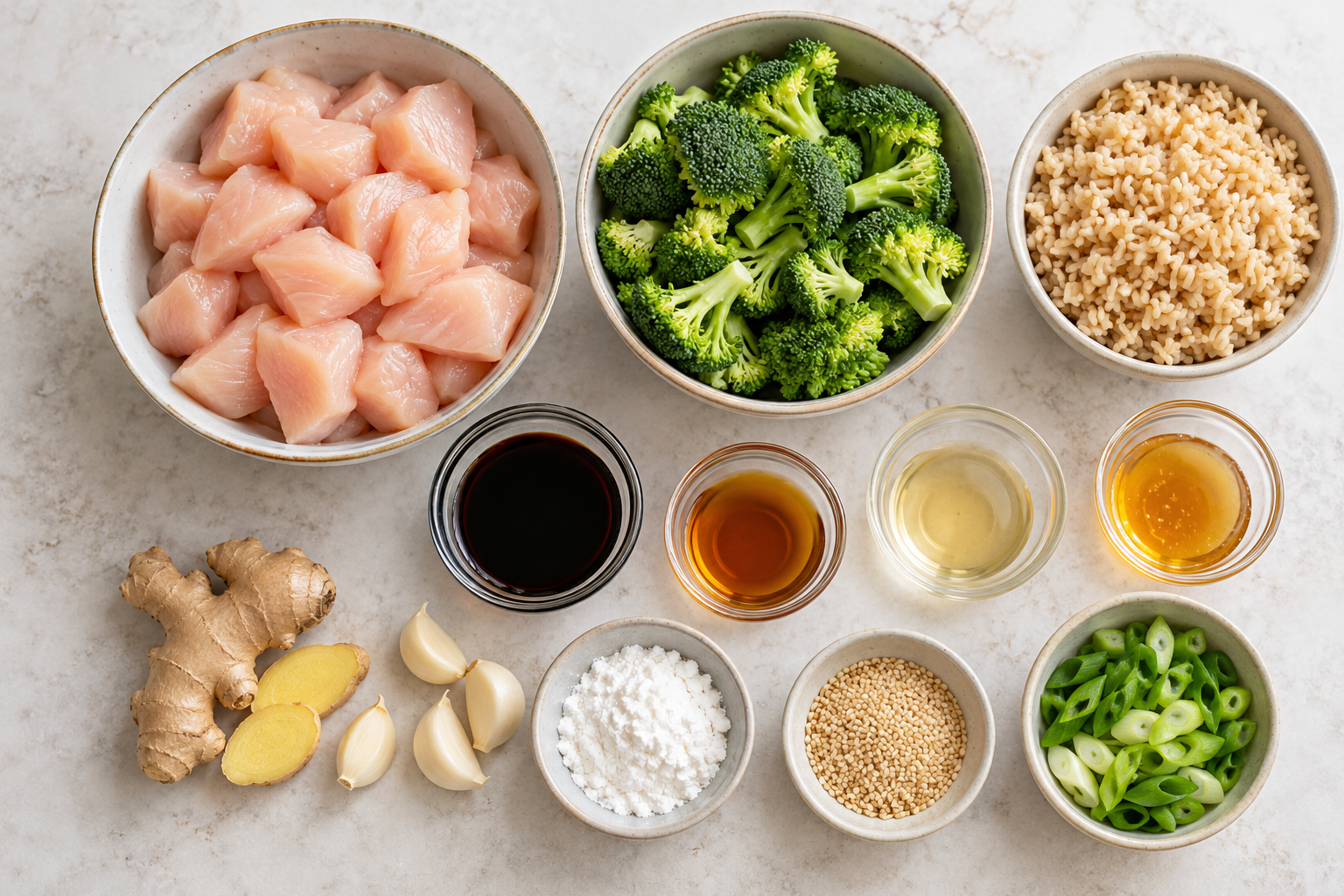
Ingredients for Sesame Chicken
Chicken breast: Cut boneless, skinless chicken into even one-inch pieces. Consistent sizing helps the pieces brown and finish at the same time. Boneless chicken thighs also work and stay especially juicy, although their cooking time may vary slightly.
Broccoli: Use small, evenly sized florets so they become tender quickly. The broccoli is steamed briefly in the skillet, then finished in the sauce. Green beans, snow peas, bell peppers, or a frozen stir-fry vegetable blend can be substituted.
Sesame sauce: Low-sodium soy sauce or tamari forms the savory base. Honey adds controlled sweetness, rice vinegar provides acidity, and toasted sesame oil supplies the signature nutty aroma. Fresh ginger and garlic keep the flavor lively.
Cornstarch: A small amount coats the chicken, encouraging browning. More cornstarch is whisked directly into the cold sauce so it thickens into a glaze as it simmers. Mixing it into cold liquid prevents lumps.
Garnishes: Toasted sesame seeds and sliced green onions add texture, color, and fresh flavor. They are more than decoration, so use both when possible.
How to Make Sesame Chicken
1. Mix the Sauce First
Whisk the soy sauce, water, honey, rice vinegar, toasted sesame oil, garlic, ginger, cornstarch, and optional red pepper flakes in a small bowl. The cornstarch will settle if the mixture stands, so whisk it again immediately before pouring it into the skillet.
2. Season the Chicken
Pat the chicken dry with paper towels. Toss it with black pepper and one tablespoon of cornstarch until no dry patches remain. Dry chicken browns more effectively, while wet pieces release steam.
3. Brown in Batches if Needed
Heat avocado oil in a large skillet over medium-high heat. Add the chicken in one layer with a little space between pieces. Cook for 6 to 8 minutes, turning occasionally, until browned and cooked through. If the skillet is small, work in two batches rather than crowding it.
4. Steam the Broccoli
Transfer the chicken to a clean plate. Add the broccoli and one-quarter cup of water to the skillet, then cover for 2 to 3 minutes. Remove the lid and let any remaining water evaporate. The broccoli should be bright green and crisp-tender rather than soft.
5. Thicken the Sesame Glaze
Whisk the sauce again and pour it into the hot skillet. Stir continuously as it begins to bubble. It should turn glossy and lightly coat a spoon within 1 to 2 minutes. Lower the heat if it thickens too quickly.

6. Combine and Finish
Return the chicken and any collected juices to the skillet. Toss with the broccoli and sauce for about one minute. The USDA recommends cooking poultry to a minimum internal temperature of 165°F (74°C), measured with a food thermometer. Sprinkle with sesame seeds and green onions before serving.
How to Keep Chicken Breast Tender
Begin with pieces that are similar in size, because tiny cubes become dry before larger chunks are cooked. Keep the skillet hot enough to brown the exterior, but reduce the heat if the fond on the pan begins to burn. Moving the chicken only occasionally also helps it develop color.
An instant-read thermometer removes the guesswork. Check one of the largest pieces near the end of cooking. Once the chicken has reached 165°F, transfer it from the skillet while you steam the broccoli and thicken the sauce. It will warm briefly again when everything is combined.
Getting the Sauce Consistency Right
The sauce should cling to the chicken without becoming rubbery or forming a thick layer in the bottom of the skillet. Cornstarch needs heat to activate, so allow the liquid to bubble gently. Stir continuously and watch closely because the change happens quickly.
If the glaze becomes too thick, add water one tablespoon at a time. If it remains thin after two minutes of simmering, mix one teaspoon of cornstarch with one tablespoon of cold water and drizzle in only as much slurry as needed. Never sprinkle dry cornstarch directly into the hot sauce.
Easy Substitutions and Variations
Use tamari labeled gluten-free if you need a gluten-free meal. Coconut aminos can replace soy sauce, but it is usually sweeter and less salty, so reduce the honey and adjust after tasting. Maple syrup can replace the honey in an equal amount.
Chicken thighs, turkey breast, shrimp, or firm tofu can be cooked with the same flavor profile. Cooking times will change, especially for shrimp and tofu. For extra heat, add more red pepper flakes or a spoonful of chili-garlic sauce.
This recipe also welcomes more vegetables. Sliced bell peppers and carrots should enter the pan before delicate snow peas. Frozen broccoli can work, but thaw and dry it first to prevent excess water from thinning the glaze.
Serving Ideas for a Tasty Healthy Dinner
Brown rice is a dependable pairing, while jasmine rice gives the meal a softer, more fragrant base. Quinoa adds extra texture, and cauliflower rice keeps the plate lighter. You can also serve the chicken in lettuce cups or over shredded cabbage.
For a larger family dinner, add cucumber salad, roasted edamame, or a simple vegetable soup. It is a healthy but fun dinner because everyone can build a bowl with their preferred grain, vegetables, and toppings.
Meal Prep, Storage, and Reheating
Divide cooled chicken and broccoli among airtight containers with rice or quinoa. This makes it easy to include the dish in a rotation of healthy breakfast, lunch, and dinner recipes. Refrigerate within two hours and use within three to four days.
Reheat a portion in a covered skillet over medium-low heat with a splash of water, or microwave it in short intervals until it reaches 165°F. The sauce may thicken in the refrigerator, so a teaspoon or two of water restores its glossy texture. Freeze the cooked chicken and sauce for up to two months; broccoli will be softer after thawing.
Frequently Asked Questions
Is this sesame chicken spicy?
No. The red pepper flakes are optional and add only mild heat. Omit them for children or anyone who prefers a sweet-savory sauce, or increase them for a spicier dinner.
Can I make the sauce ahead?
Yes. Whisk the sauce up to three days ahead and refrigerate it in a sealed jar. Shake or whisk thoroughly before using because the cornstarch settles at the bottom.
Can I double the recipe?
Yes, but brown the chicken in several batches and steam the broccoli separately if necessary. Crowding the skillet lowers the temperature and prevents proper browning. Double every sauce ingredient in the same proportion.
Why did my sesame sauce become too thick?
It probably simmered too long or over very high heat. Remove the skillet from the burner and stir in water one tablespoon at a time until the sauce loosens. Combine with the chicken as soon as it reaches a glossy consistency.
A Better Weeknight Sesame Chicken
This Sesame Chicken Recipe proves that a quick dinner can still feel colorful and satisfying. With juicy chicken, crisp broccoli, a controlled amount of sweetener, and a fragrant sesame-ginger glaze, it is an easy option for busy nights, meal prep, or anyone building a collection of super-healthy dinner recipes.
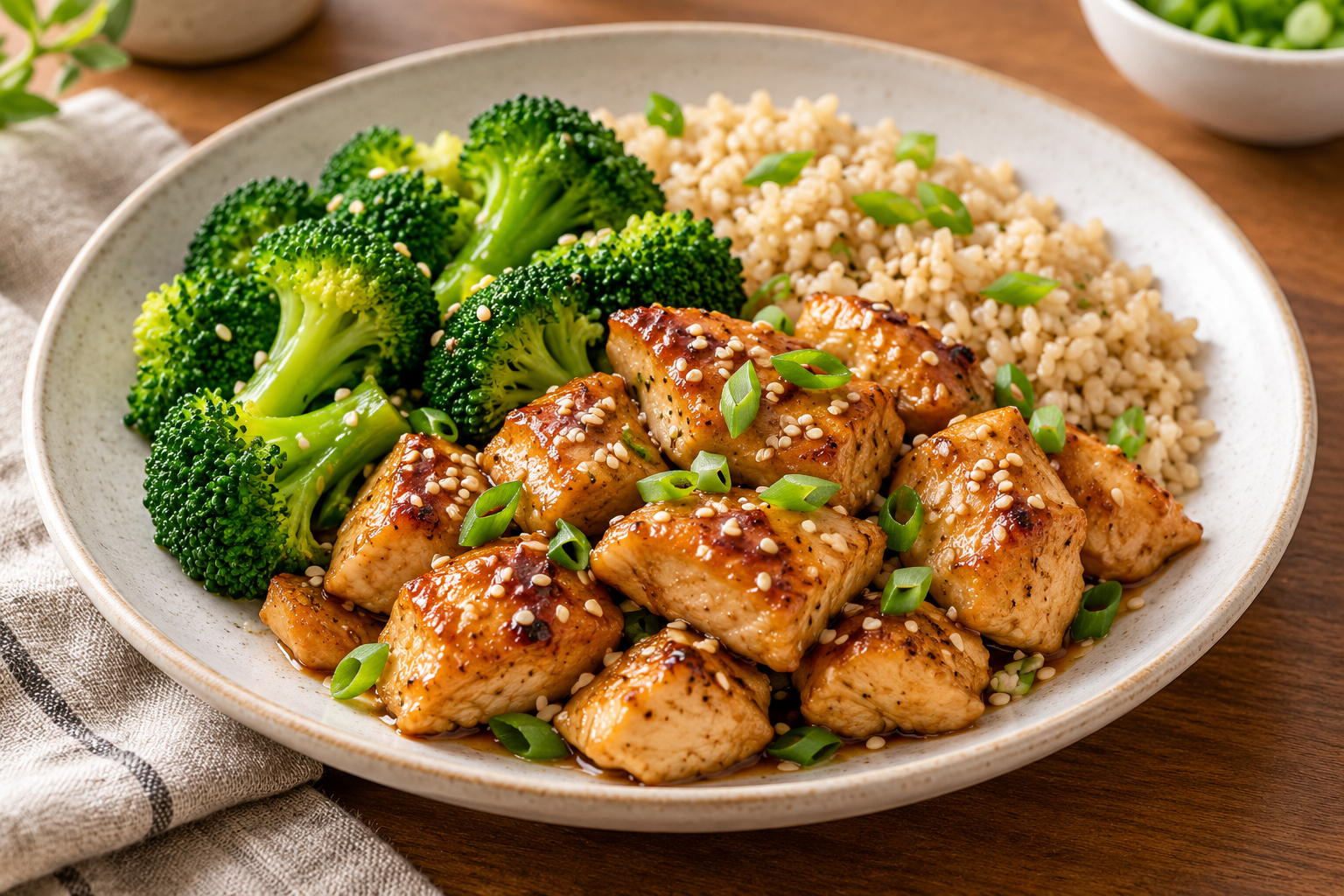

Healthy Sesame Chicken
Ingredients
Equipment
Method
- Whisk the soy sauce, 3 tablespoons water, honey, rice vinegar, sesame oil, garlic, ginger, 2 teaspoons cornstarch, and optional red pepper flakes in a small bowl.
- Pat the chicken dry. Toss it with 1 tablespoon cornstarch and black pepper until evenly coated.
- Heat the avocado oil in a large skillet over medium-high heat. Add the chicken in one layer and cook for 6 to 8 minutes, turning occasionally, until browned and the largest pieces reach 165°F (74°C). Transfer to a clean plate.
- Add the broccoli and 1/4 cup water to the skillet. Cover and cook for 2 to 3 minutes. Remove the lid and allow remaining water to evaporate.
- Whisk the sauce again, pour it into the skillet, and stir continuously for 1 to 2 minutes until bubbling, glossy, and thick enough to coat a spoon.
- Return the chicken and its juices to the skillet. Toss with the broccoli and sauce for 1 minute. Garnish with sesame seeds and green onions, then serve with the optional grain.
Notes
- Brown the chicken in batches if the skillet is crowded.
- Whisk the sauce immediately before adding it because cornstarch settles.
- Add water one tablespoon at a time if the glaze becomes too thick.
- Refrigerate leftovers within 2 hours and use within 3 to 4 days.