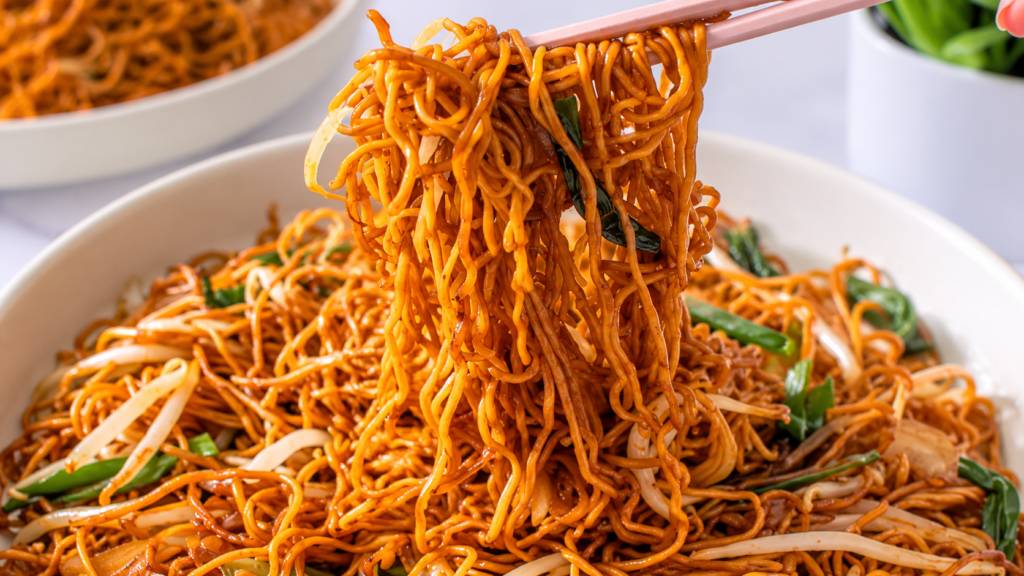
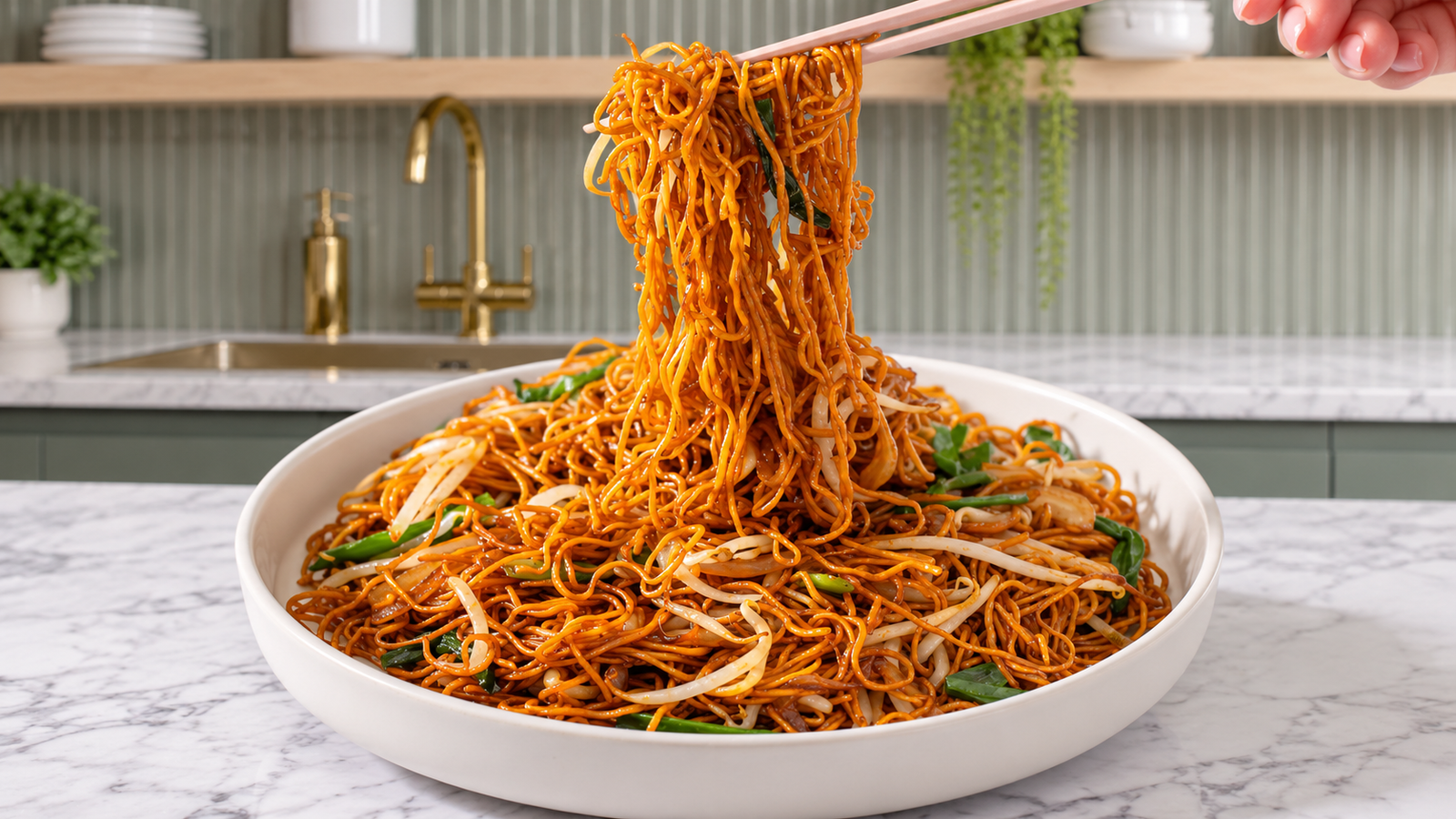
Chow mein is one of those comforting meals that comes together quickly and still feels special. The noodles are savory with lightly crisp edges, while the cabbage, carrot, and bean sprouts add a fresh crunch. This easy chow mein recipe is simple enough for a weeknight dinner and flexible enough to adjust with whatever vegetables or protein you have in the fridge.
The secret is preparing everything before you start cooking. Once the pan is hot, the vegetables and noodles move quickly. Keep the ingredients close by, stir often, and you’ll have a flavorful dinner ready in about 25 minutes.
Ingredients
- 8 ounces thin chow mein noodles or thin egg noodles
- 2 tablespoons vegetable oil, divided
- 2 cloves garlic, minced
- 2 cups shredded cabbage
- 1 medium carrot, cut into thin matchsticks
- 1 cup bean sprouts
- 3 green onions, cut into pieces
- 2 tablespoons light soy sauce
- 1 tablespoon dark soy sauce
- 1 tablespoon oyster sauce
- 1 teaspoon sesame oil
- 1 teaspoon sugar
- ¼ teaspoon white or black pepper
- 2 tablespoons water
Instructions
- Cook the noodles according to the package directions. Drain them well, rinse under cold water, and set aside. If you’re using fresh noodles, follow the package directions for soaking or blanching.
- In a small bowl, mix the light soy sauce, dark soy sauce, oyster sauce, sesame oil, sugar, pepper, and water.
- Heat 1 tablespoon of vegetable oil in a large skillet or wok over medium-high heat. Add the noodles in an even layer and let them cook for about 1 minute without stirring. Toss them and cook for another minute, until some edges turn lightly golden. Transfer the noodles to a plate.
- Add the remaining oil to the pan. Stir in the garlic and cook for about 10 seconds, just until fragrant.
- Add the cabbage and carrot. Stir-fry for 1 to 2 minutes, keeping the vegetables slightly crisp.
- Add the bean sprouts and the white parts of the green onions. Cook for another 30 seconds.
- Return the noodles to the pan and pour in the sauce. Toss everything together for 1 to 2 minutes, until the noodles are hot and evenly coated.
- Turn off the heat, stir in the green onion tops, and serve immediately.
Tips for the Best Chow Mein
Drain the noodles thoroughly before frying. If they are too wet, they’ll steam in the pan instead of browning. A large skillet gives the noodles space to crisp; if your pan is small, cook them in batches.
Chow mein cooks quickly, so prepare the vegetables and sauce before heating the pan. Keep the heat fairly high, but watch the garlic closely because it can burn in seconds.
Easy Variations
For chicken chow mein, cook thinly sliced chicken in the pan first, then set it aside while you prepare the vegetables. Add it back with the noodles and sauce. Shrimp, tofu, or thin strips of beef work well too.
To make the dish vegetarian, replace the oyster sauce with mushroom stir-fry sauce or hoisin sauce. You can also add sliced mushrooms, bell pepper, bok choy, or snow peas. If you like a little heat, stir in chili garlic sauce or red pepper flakes with the garlic.
Storage and Serving
Chow mein tastes best straight from the pan, while the noodles are still warm and lightly crisp. Serve it as a main dish or alongside dumplings, spring rolls, or a simple cucumber salad.
Store leftovers in an airtight container in the refrigerator for up to 3 days. Reheat them in a skillet over medium heat with a small splash of water. The noodles will soften a little, but the flavor will still be delicious.
Frequently Asked Questions
Can I use spaghetti instead of chow mein noodles?
Yes. Spaghetti or linguine works in a pinch. Cook it until just tender, drain it well, and pan-fry it as directed. The texture will be a little different from thin chow mein noodles.
What is the difference between chow mein and lo mein?
Chow mein is stir-fried, and the noodles may develop lightly crisp edges. Lo mein is usually softer and tossed with a saucier mixture.
Do I need a wok?
No. A large skillet works well. Choose one with enough room to toss the noodles and vegetables without crowding them.
Can I make chow mein ahead?
You can prepare the vegetables and sauce ahead of time, but cook the noodles just before serving for the best texture.
How can I make it vegetarian?
Use mushroom sauce or hoisin sauce instead of oyster sauce, and add tofu or extra vegetables if you like.
Why did my noodles turn mushy?
They may have been overcooked or too wet before going into the pan. Drain them thoroughly and cook them just until tender before stir-frying.

Easy Chow Mein
Ingredients
Equipment
Method
- Cook or soak the chow mein noodles according to their type, then rinse under cold water and drain thoroughly.
- Whisk the light soy sauce, dark soy sauce, oyster sauce, sesame oil, sugar, pepper, and water in a small bowl.
- Heat 1 tablespoon of oil in a large skillet over medium-high heat. Pan-fry the noodles for 2 to 3 minutes until lightly golden and crisp, then transfer them to a plate.
- Add the remaining oil and cook the garlic for 10 seconds until fragrant.
- Add the cabbage and carrot. Stir-fry for 1 to 2 minutes, until the cabbage begins to soften but remains crisp.
- Add the bean sprouts and white parts of the green onions. Cook for 30 seconds.
- Return the noodles to the pan, pour in the sauce, and toss for 1 to 2 minutes until coated and glossy.
- Turn off the heat, stir in the green onion tops, and serve immediately.
Notes
- Use a large pan so the noodles fry instead of steam.
- For a vegetarian version, replace oyster sauce with mushroom stir-fry sauce or hoisin sauce.
- Add cooked chicken, shrimp, or tofu for extra protein.
- Keep the heat high but watch the garlic closely to prevent burning.