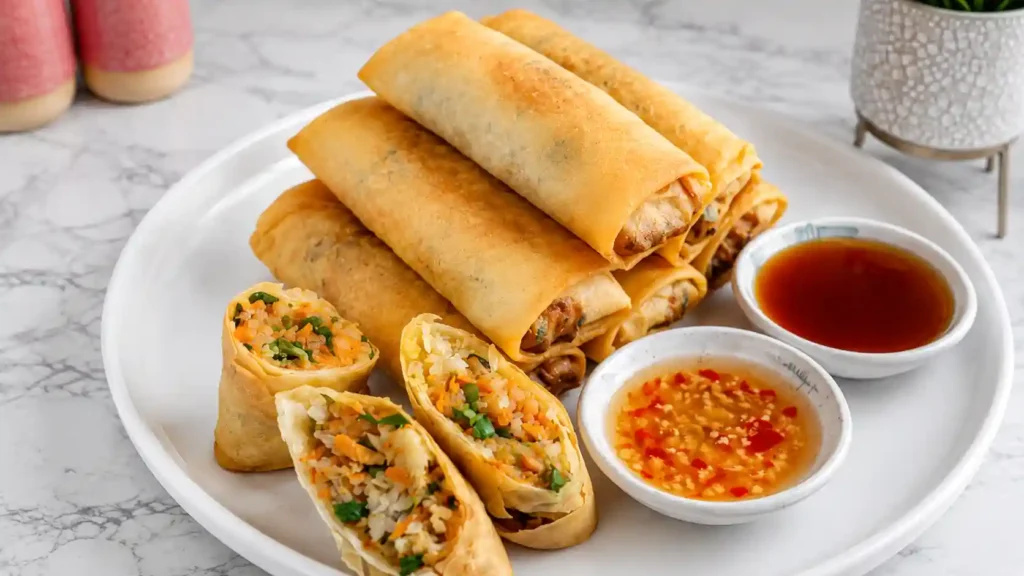
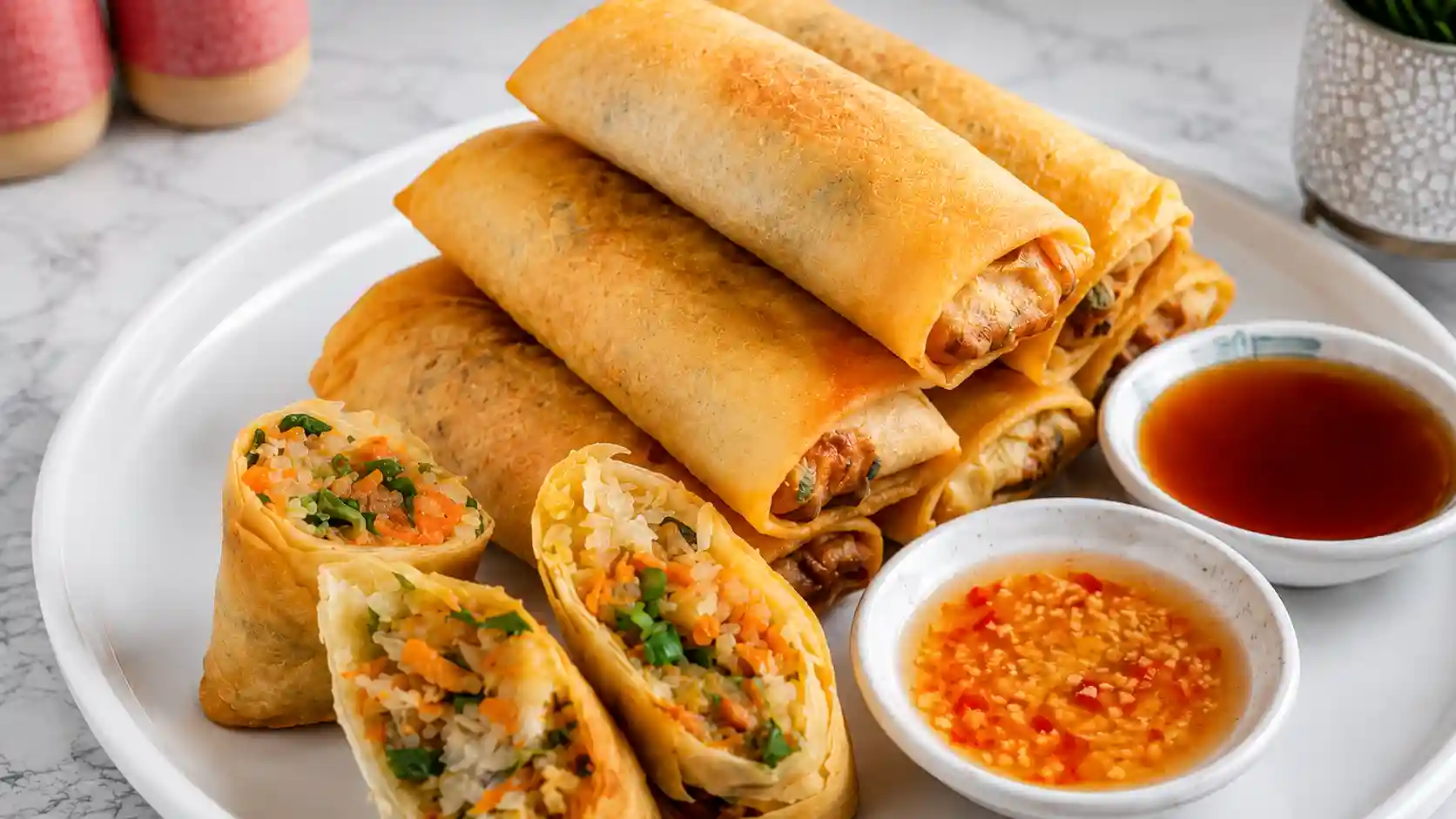
There’s something magical about pulling a plate of crispy Chinese Spring Rolls from the fryer. The shattering crunch as you bite into that golden wrapper, the savory steam rising from the vegetable and pork filling, and that irresistible urge to grab another one immediately. I remember my first attempt at making these at home. I was skeptical. Could they really match the restaurant version I’d been ordering for years? Turns out, with the right technique, homemade spring rolls don’t just match takeout. They blow it away.
These Deep Fried Spring Rolls have become my go-to appetizer for gatherings. Friends always ask for the recipe. The beauty lies in their simplicity. You don’t need to precook the filling. The vegetables stay crunchy, the pork stays tender, and everything cooks perfectly as the rolls fry to golden perfection. Whether you’re making these for Lunar New Year, a weekend snack, or just craving something crispy and satisfying, this Spring Roll Recipe Fried method delivers every single time.
What Makes Perfect Chinese Spring Rolls
Traditional Chinese Spring Rolls, or 春卷 (Chun Juan), are cylinder-shaped parcels with crispy wheat-based wrappers and a savory filling. Unlike Vietnamese spring rolls that use rice paper, Chinese versions use square flour-based wrappers that create that signature shatteringly crisp texture when fried. The filling typically includes pork, shrimp, vegetables like cabbage and carrots, and sometimes glass noodles for texture.
The key to avoiding greasy results comes down to three things. First, keep your filling dry so it doesn’t soak through the wrapper. Second, wrap tightly to eliminate air pockets. Third, fry at the right temperature, around 350°F for deep frying or 390°F for air frying. Get these right and you’ll have that Plate Of Golden Fried Spring Rolls look and taste that makes everyone reach for another.
Chinese Spring Roll Ingredients for Authentic Flavor
Getting your Chinese Spring Roll Ingredients right sets the foundation for success. The filling is flexible and forgiving. You can adjust based on what you have available. The core components remain the same. Protein, vegetables, aromatics, and seasonings come together to create that familiar savory taste.
- 15 large spring roll wrappers, 10×10 inches, thawed
- 200g minced pork or ground chicken
- 120g shrimp, peeled and diced small
- 120g carrot, grated or finely julienned
- 130g bean sprouts, drained well
- 100g Chinese chives or shredded cabbage, cut into sections
- 6 shiitake mushrooms, thinly sliced
- 2 scallions, finely chopped
- 100g mung bean vermicelli, soaked and cut into 2-inch pieces
- 2 eggs, beaten
- 2 tablespoons oyster sauce
- 1 teaspoon sesame oil
- ½ teaspoon salt
- ½ teaspoon sugar
- ¼ teaspoon white or black pepper
- 1 egg yolk for sealing wrappers
- Neutral oil for deep frying or air frying
For the optional dipping sauce, mix 2 tablespoons rice vinegar, 1 teaspoon light soy sauce, a pinch of sugar, 1 minced garlic clove, and fresh chili to taste. This tangy complement cuts through the richness beautifully.
Now let’s talk about the secret technique that elevates this dish from good to restaurant-quality. The filling goes in raw. Yes, really. Many recipes call for stir-frying the vegetables first, but that extra step actually works against you. Raw ingredients cook perfectly during frying while staying tender and crunchy. You save time, use less oil overall, and avoid washing an extra pan. Win-win-win.
How to Make Crispy Pan-fried Spring Rolls at Home
Start by preparing your workspace. Separate the thawed wrappers carefully and keep them covered with a damp cloth. They dry out fast and become brittle. Mix all filling ingredients in a large bowl. Use your hands for best distribution. Wear gloves if you prefer. The mixture should hold together when pressed but not be wet or sloppy.
For assembly, place a wrapper with one corner facing you like a diamond. Add about 3 tablespoons of filling near that corner. Shape it into a rough rectangle with your spoon. Lift the corner up and over the filling, rolling it halfway up the wrapper. Fold in the left and right sides like an envelope. Continue rolling until you have a triangle at the top. Brush that triangle with egg yolk and finish rolling to seal. Repeat with remaining wrappers and filling.
For Deep-frying Spring Rolls, heat oil in a wok or deep pan to 350°F. The oil should be at least twice as deep as your rolls are thick. Fry in batches of 4-6, never overcrowding. Turn occasionally for even browning. About 3-4 minutes per batch gets you that perfect golden color. Drain on paper towels. For frozen rolls, fry straight from frozen at 375°F for an extra minute or two.
Pro Tips for Perfect Results Every Time
- Keep wrappers covered with a damp cloth while working to prevent drying and cracking
- Don’t overfill. Too much filling makes rolling difficult and increases bursting risk
- Wrap tightly to eliminate air pockets that cause uneven cooking
- Use a thermometer for oil temperature. Guessing leads to greasy or burnt results
- Fry in small batches to maintain consistent oil temperature
- Let filling ingredients drain well, especially bean sprouts and soaked noodles
Variations to Try
This Chinese Spring Rolls Recipe adapts beautifully to different dietary needs and preferences. Go vegetarian by skipping the pork and shrimp, adding extra mushrooms, tofu, or additional vegetables instead. Swap chicken for pork if you prefer. Add water chestnuts for extra crunch. Include bamboo shoots for authentic restaurant flavor. Some regions add wood ear mushrooms for texture. Feel free to experiment once you’ve mastered the basic technique.
Troubleshooting Common Issues
If your spring rolls are greasy, your oil temperature was likely too low. They absorbed oil instead of sealing quickly. Next time, wait until the oil reaches proper temperature before adding rolls. If wrappers burst during frying, you probably overfilled them or didn’t wrap tightly enough. Air pockets expand and crack the wrapper. If they’re soggy instead of crispy, the filling may have been too wet or you didn’t drain ingredients properly.
Ingredient Substitutions
No Chinese chives? Use shredded cabbage or extra scallions. Can’t find mung bean vermicelli? Regular thin rice noodles work in a pinch, though the texture differs slightly. Vegetarian oyster sauce or mushroom stir-fry sauce replaces regular oyster sauce for plant-based versions. Regular ground pork substitutes for minced if that’s what you have. The recipe is flexible and forgiving.
Storage and Serving Suggestions
Uncooked assembled spring rolls freeze beautifully for up to three months. Freeze them immediately after assembly on a tray, then transfer to airtight bags once solid. Cook from frozen, adding a couple minutes to cooking time. Cooked spring rolls keep in the fridge for 2-3 days. Reheat in a 390°F oven for 10 minutes or air fryer for 5 minutes to restore crispness. Serve warm with the tangy dipping sauce, sweet chili sauce, or even just on their own.
Frequently Asked Questions
Can I make Chinese Spring Rolls ahead of time?
Absolutely. Assemble them and freeze immediately. They cook perfectly from frozen. Just increase frying time slightly. Don’t refrigerate uncooked rolls as the filling moisture softens wrappers over time.
What’s the difference between spring rolls and egg rolls?
Chinese spring rolls use thin wheat wrappers and have a lighter, crispier texture. American egg rolls use thicker wrappers with egg in the dough, creating a chewier, bubble-textured exterior. Both are delicious but distinct.
Can I air fry instead of deep fry?
Yes. Preheat air fryer to 390°F. Brush rolls with oil and cook 8-10 minutes, flip, then 5 more minutes until golden. The exterior won’t be quite as shatteringly crisp as deep fried, but still delicious and much lighter.
Why are my spring rolls soggy?
Soggy results usually come from wet filling, oil that’s not hot enough, or overcrowding the pan. Drain ingredients well, use a thermometer, and fry in small batches for best results.
Do I need to precook the filling?
No. Raw filling cooks perfectly during frying while staying tender and crunchy. Precooking adds unnecessary steps and can actually make vegetables mushy. Keep it raw for best texture.
What oil works best for frying?
Use neutral oils with high smoke points like canola, peanut, vegetable, or sunflower oil. These handle the 350°F frying temperature without burning or imparting off-flavors.
Can I make these vegetarian?
Definitely. Skip the pork and shrimp, add extra vegetables, tofu, or mushrooms instead. Use vegetarian oyster sauce. The technique remains identical. You’ll still get that crispy, satisfying result.

Chinese Spring Rolls (春卷)
Ingredients
Equipment
Method
- Thaw spring roll wrappers in refrigerator overnight. Keep covered with damp cloth while working.
- Mix filling ingredients in large bowl. Combine minced pork, shrimp, carrot, bean sprouts, chives, mushrooms, scallions, vermicelli, eggs, oyster sauce, sesame oil, salt, sugar, and pepper. Mix well with hands until evenly distributed.
- Assemble spring rolls by placing wrapper as diamond. Add 3 tbsp filling near bottom corner. Fold corner over filling, roll halfway, fold in sides, continue rolling. Brush top triangle with egg yolk and seal.
- For deep frying, heat oil to 350°F. Fry rolls in batches of 4-6 for 3-4 minutes, turning occasionally, until golden brown. Drain on paper towels.
- For air frying, preheat to 390°F. Brush rolls with oil. Cook 8-10 minutes, flip, cook 5 more minutes until golden.
- Serve warm with optional dipping sauce made from rice vinegar, soy sauce, garlic, and chili.
Notes
- Keep wrappers covered with damp cloth to prevent drying
- Don’t overfill or rolls will burst during frying
- Use thermometer for accurate oil temperature
- Freeze uncooked rolls for up to 3 months
- Cook from frozen, adding 2 minutes to cooking time