
Cooking Filet Mignon in Cast Iron Pan is one of the most reliable ways to create a steakhouse-style dinner at home. A heavy skillet produces a deeply browned crust, while a short oven finish cooks the thick center gently. Add garlic, butter, thyme, and rosemary, and an elegant meal comes together with only a handful of ingredients.
This method is designed for two thick center-cut steaks. It explains how to prepare the beef, preheat the skillet, baste with aromatic butter, check the internal temperature, and rest the meat properly. Once you understand the timing, a cast iron filet becomes surprisingly simple.
Why Cast Iron Works So Well for Filet Mignon
Filet mignon is exceptionally tender but relatively lean, so it benefits from fast browning and careful temperature control. Cast iron stores heat better than a thin pan. When the chilled steak touches the skillet, the cooking surface stays hot enough to form a flavorful crust instead of releasing moisture and steaming the meat.
A cast iron skillet can also move safely from the stovetop to the oven. That makes this Cast Iron Filet Mignon Recipe easy to manage: sear both sides, add butter and herbs, then finish the steaks without changing pans. The skillet also holds the garlic-herb butter for basting and serving.
- Strong, even sear: Stored heat encourages consistent browning.
- Easy oven finish: Thick steaks cook more evenly after searing.
- Rich pan flavor: Butter, garlic, and herbs mingle with the browned steak juices.
- Minimal cleanup: The entire recipe uses one skillet.
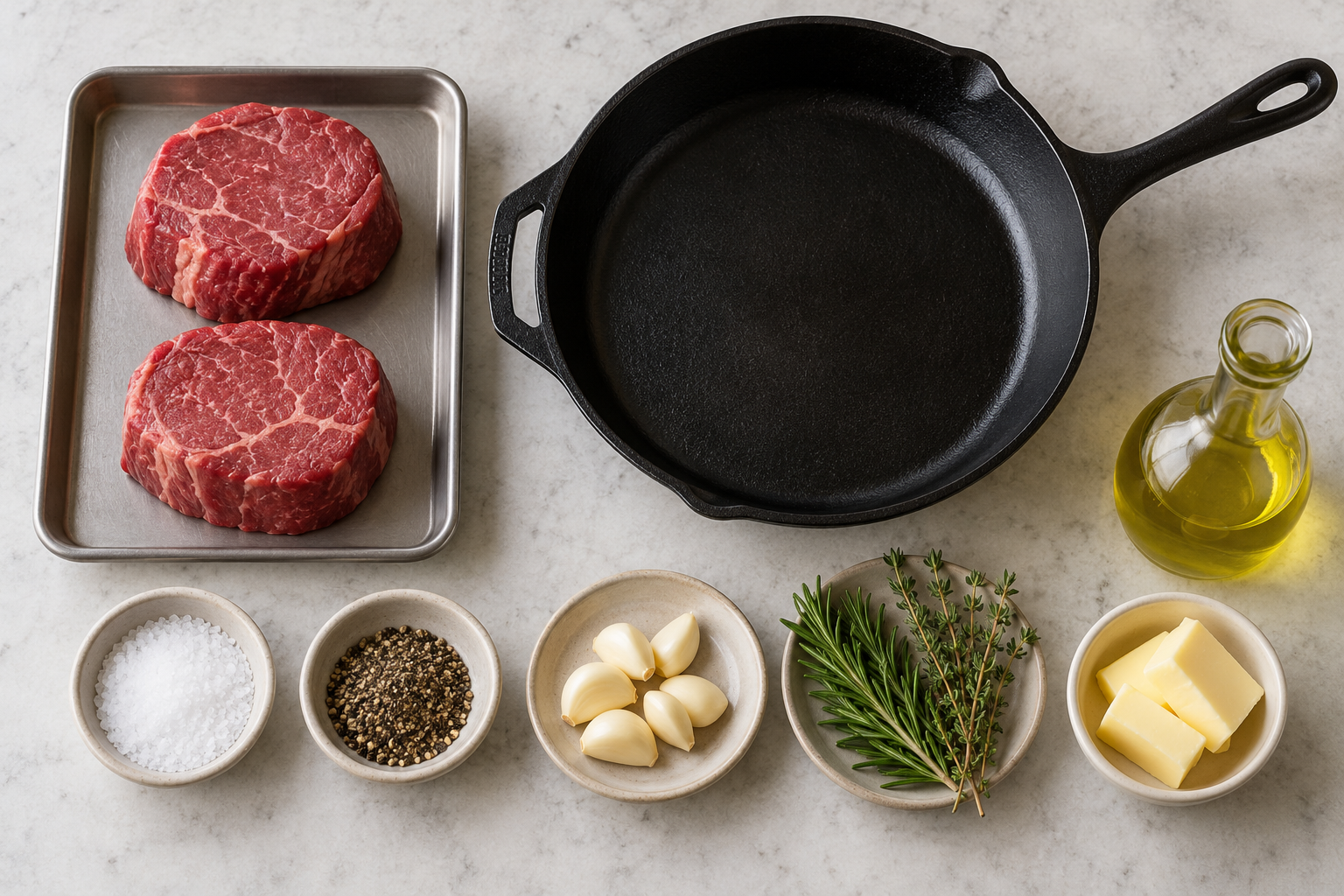
Ingredients for the Best Filet Mignon Recipe Cast Iron Method
Choose two filet mignon steaks that are 1½ to 2 inches thick and similar in size. Even thickness matters more than exact weight because it allows both steaks to finish together. Look for neat center-cut portions with a rich red color and remove any tough silver skin around the edges.
Avocado oil is useful because it tolerates high heat and has a neutral flavor. Kosher salt and coarsely ground black pepper create the basic crust. Unsalted butter, lightly crushed garlic cloves, fresh thyme, and rosemary are added after the first sear so they flavor the steak without burning.
You will also need a 10- or 12-inch cast iron skillet, long tongs, an oven mitt, and an instant-read thermometer. The skillet handle becomes extremely hot in the oven, so keep the mitt beside the stove from the beginning.
How to Cook Filet Mignon in a Cast Iron Skillet
1. Temper and Dry the Steaks
Remove the steaks from the refrigerator about 25 to 30 minutes before cooking. Pat every surface dry with paper towels. Moisture prevents browning, so this small step has a major effect on the crust. Season all sides with salt and black pepper just before the steaks enter the pan.
2. Preheat the Oven and Skillet
Heat the oven to 425°F (220°C). Place the empty skillet over medium-high heat for 3 to 4 minutes. Add the avocado oil and swirl it across the surface. The oil should shimmer, but it should not produce heavy smoke.
3. Sear Without Moving
Lay the steaks in the hot skillet with space between them. Sear the first side for 2½ to 3 minutes without sliding or lifting the meat. Flip with tongs and sear the second side for 2 minutes. Briefly hold each steak against the pan to brown the edges.
4. Add Garlic-Herb Butter
Reduce the burner to medium-low. Add the butter, garlic, thyme, and rosemary. As the butter foams, tilt the skillet slightly and spoon it over each steak for about 30 seconds. This quick baste is what gives Skillet Filet Mignon its glossy finish and steakhouse aroma.
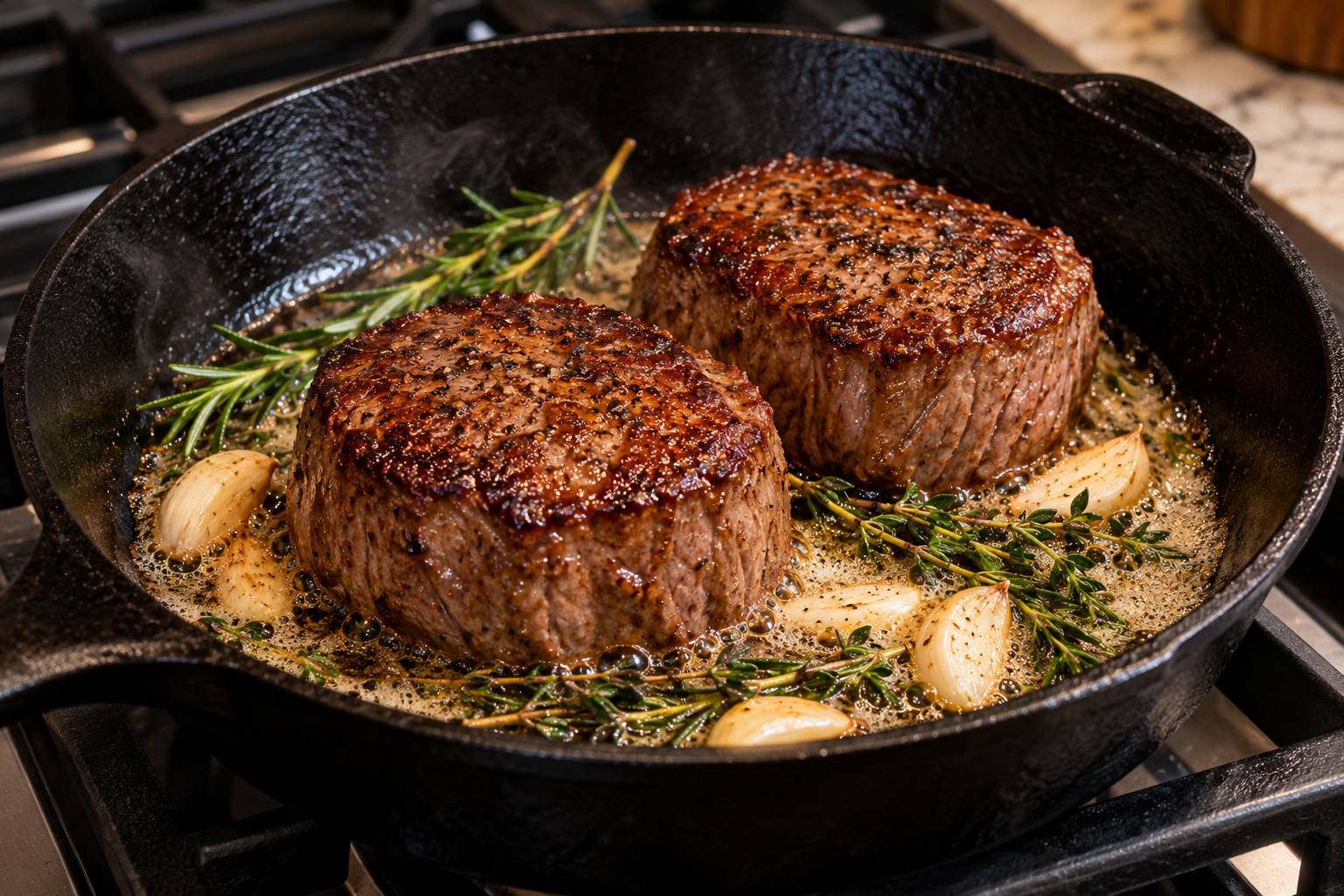
5. Finish in the Oven
Transfer the skillet to the preheated oven. Begin checking after 4 minutes; thick steaks may require 6 to 8 minutes. Insert the thermometer through the side into the center of each steak. Cooking time is only an estimate because thickness, starting temperature, and oven calibration vary.
6. Rest Before Serving
Move the steaks to a warm plate and spoon over a little pan butter. Rest for at least 5 minutes before slicing. Resting reduces the amount of juice lost on the cutting board and allows carryover heat to finish the center.
Filet Mignon Temperature and Food Safety
Use a food thermometer rather than judging the steak by color or touch. The USDA safe temperature chart recommends cooking beef steaks to a minimum internal temperature of 145°F (63°C), followed by a rest of at least 3 minutes. People who choose a lower final temperature accept additional food-safety risk, especially with mechanically tenderized beef. Check the package label if you are unsure.
Measure in the thickest part, away from the skillet and any large pocket of fat. Check both steaks because one may cook faster. A dependable thermometer is the most important tool in any collection of Filet Mignon Recipes Cast Iron Skillet cooks use.
Tips for a Deep Brown Crust
Dry the surface thoroughly. Even a small amount of water must evaporate before browning can begin.
Preheat patiently. A properly heated pan creates immediate contact browning. Add the steaks only after the oil shimmers.
Leave room between steaks. Overcrowding lowers the pan temperature and traps steam. Cook in batches if your skillet is smaller than 10 inches.
Do not move them too soon. The crust releases naturally when it is developed. Repeated lifting interrupts browning.
Add butter later. Butter solids burn at intense searing heat. Oil handles the first stage; butter joins after both main surfaces are browned.
Common Mistakes to Avoid
Do not rely only on minutes. A 1-inch steak and a 2-inch steak cannot follow the same oven schedule. Avoid piercing the meat repeatedly with a fork, which releases juices and makes turning awkward. Tongs are safer and more precise.
Do not slice immediately to check the center. This releases moisture and still does not confirm a safe temperature. Finally, remember that cast iron remains hot long after it leaves the oven. Cover the handle with a mitt and keep it turned away from the counter edge.
Serving Ideas
This Filet Mignon Cast Iron Skillet dinner pairs naturally with mashed potatoes, roasted baby potatoes, asparagus, green beans, or a crisp wedge salad. For a lighter plate, add sautéed mushrooms and lemon-dressed greens. Spoon the garlic-herb pan butter over the steaks just before serving, but use it sparingly so the delicate beef remains the main flavor.
The method also works for a special date-night meal. Prepare the side dishes first, then cook the steaks last. A rested filet stays hot for several minutes, giving you time to arrange the plates without rushing.
Frequently Asked Questions
Can I make Cast Iron Filet Mignon without an oven?
Yes, but lower the stovetop heat after searing and continue turning the steaks every minute until they reach the required temperature. An oven gives thick filets gentler, more even heat.
Can I use olive oil?
Refined olive oil can work, but extra-virgin olive oil may smoke at high searing temperatures. Avocado, grapeseed, or another neutral high-heat oil is easier to manage.
Why is my filet mignon gray instead of brown?
The steak was probably damp, the skillet was not hot enough, or the pan was crowded. Dry the meat, preheat fully, and leave space around each filet.
Are “fillet” and “filet” mignon the same?
Yes. American recipes usually use “filet,” while “fillet” appears in other English-speaking regions. Searches for Fillet Mignon Recipes Cast Iron generally refer to the same tender beef cut and cooking method.
A Reliable Cast Iron Steak Dinner
With a dry surface, a properly heated skillet, a short garlic-butter baste, and a thermometer, Cooking Filet Mignon In Cast Iron becomes predictable rather than intimidating. This simple stovetop-to-oven technique delivers a browned exterior, tender center, and rich pan flavor using one skillet and everyday seasonings.
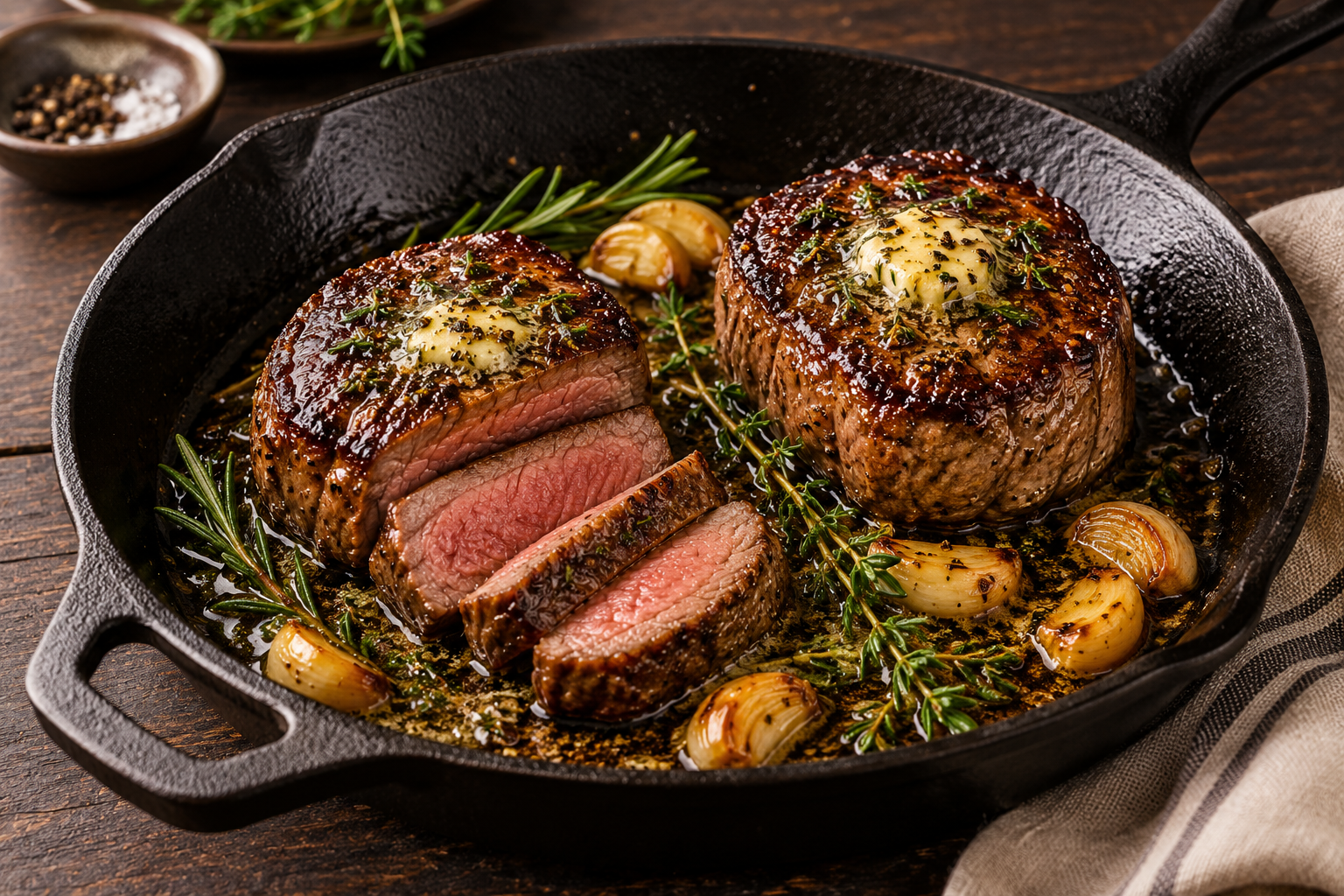

Cooking Filet Mignon in Cast Iron Pan
Ingredients
Equipment
Method
- Remove the filet mignon from the refrigerator 25 to 30 minutes before cooking. Pat every surface thoroughly dry with paper towels.
- Preheat the oven to 425°F (220°C). Place the cast iron skillet over medium-high heat for 3 to 4 minutes.
- Season all sides of the steaks evenly with the kosher salt and black pepper.
- Add the avocado oil to the hot skillet. Place the steaks in the pan with space between them and sear without moving for 2 1/2 to 3 minutes. Flip and sear the second side for 2 minutes. Briefly brown the edges with tongs.
- Reduce the burner to medium-low. Add the butter, garlic, thyme, and rosemary. When the butter foams, tilt the skillet carefully and spoon the butter over each steak for about 30 seconds.
- Transfer the skillet to the oven. Begin checking after 4 minutes and continue cooking as needed until the thickest part of each steak reaches 145°F (63°C) for the USDA safe minimum temperature.
- Transfer the steaks to a warm plate, spoon over a little pan butter, and rest for at least 5 minutes before slicing.
- Serve whole or slice across the grain. Spoon over additional garlic-herb butter if desired.
Notes
- The USDA recommends cooking beef steaks to 145°F (63°C) and resting for at least 3 minutes.
- Cooking time varies with steak thickness, starting temperature, and oven accuracy; rely on a thermometer.
- The cast iron handle stays dangerously hot after the skillet leaves the oven. Keep an oven mitt on the handle.
- Check the label for mechanical tenderization and follow the safe-temperature guidance.


