
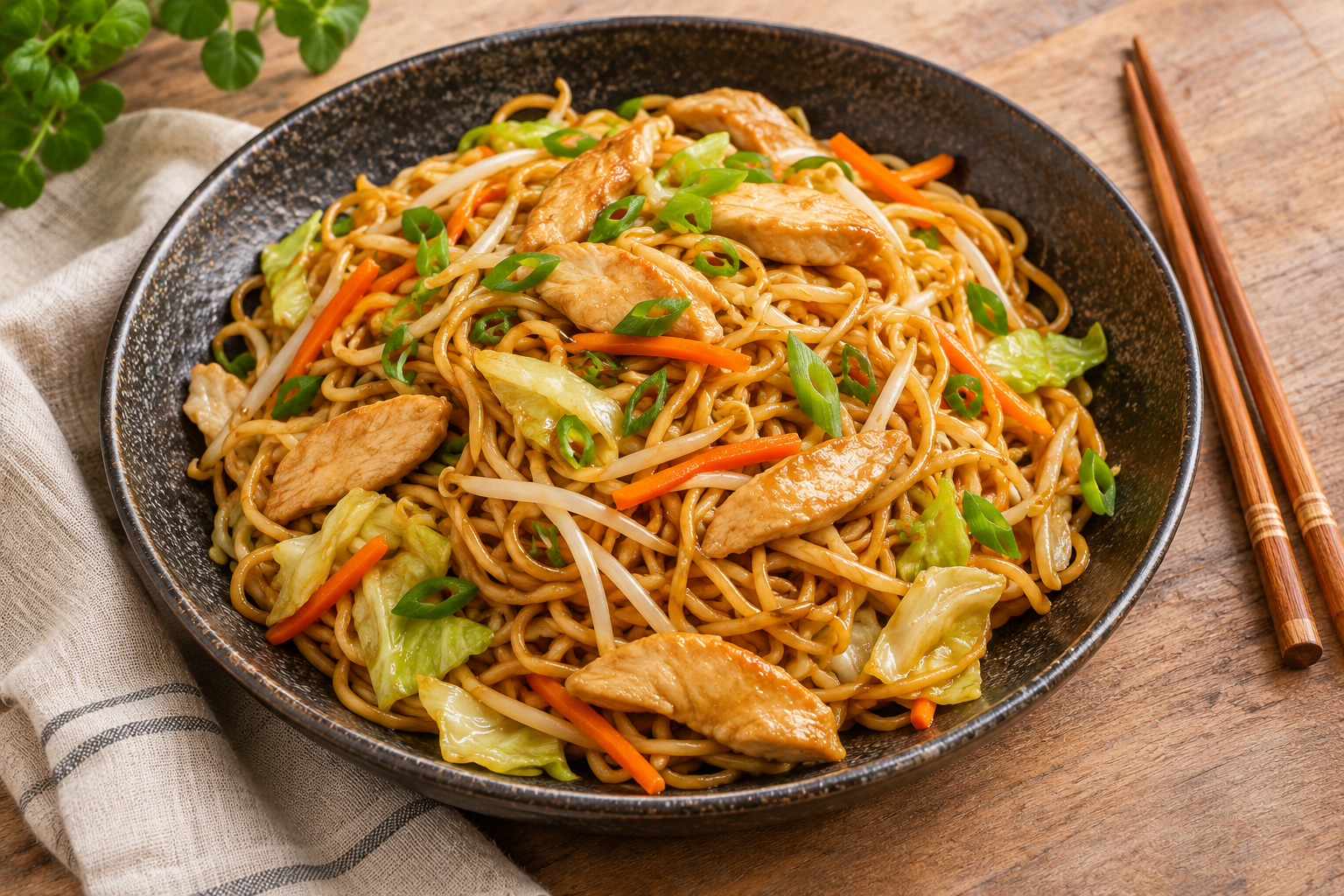
There is something comforting about a plate of chow mein: thin noodles with crisp browned edges, a light savory sauce, crunchy bean sprouts, and the fresh bite of green onion. This easy chow mein recipe brings that takeout-style flavor into your own kitchen without needing a long ingredient list or restaurant equipment.
I first started making chow mein on busy weeknights because it uses vegetables that are usually already in the refrigerator. A little cabbage, one carrot, garlic, and bean sprouts can turn into a satisfying dinner in less than half an hour. The smell of garlic hitting hot oil is enough to make everyone wander into the kitchen before dinner is even ready.
This version is inspired by Chinese cooking recipes that favor high heat, quick cooking, and balanced seasoning. You do not need a wok, although one helps. A wide skillet works well too. The goal is simple: cook the noodles until lightly crisp, keep the vegetables bright and crunchy, and coat everything in a sauce that tastes savory rather than overly sweet.
Easy Chow Mein Recipe Ingredients
For the best texture, look for thin chow mein noodles, sometimes labeled Hong Kong-style pan-fried noodles. Thin egg noodles are a good alternative. Avoid thick, soft lo mein noodles if you want the signature crisp finish; chow mein noodles are usually thinner and are pan-fried after a brief soak or parboil. [1][3]
- 8 ounces thin chow mein noodles or thin egg noodles
- 2 tablespoons vegetable oil, divided
- 2 cloves garlic, finely minced
- 2 cups finely shredded green cabbage
- 1 medium carrot, cut into thin matchsticks
- 1 cup bean sprouts
- 3 green onions, cut into 2-inch pieces
- 2 tablespoons light soy sauce
- 1 tablespoon dark soy sauce
- 1 tablespoon oyster sauce
- 1 teaspoon sesame oil
- 1 teaspoon sugar
- 1/4 teaspoon white pepper or black pepper
- 2 tablespoons water
How to Make Easy Chow Mein
Prepare the Noodles and Sauce
- Bring a pot of water to a boil. If using dried chow mein noodles, cook them according to the package directions, usually about 5 minutes, then drain well. For fresh or steamed noodles, soak them in hot water for 20 to 30 seconds, then drain. [1][4]
- Rinse the noodles under cold water to stop the cooking. Drain them very well and spread them out on a tray for a few minutes so excess moisture can evaporate.
- In a small bowl, whisk together the light soy sauce, dark soy sauce, oyster sauce, sesame oil, sugar, pepper, and water. Set the sauce beside the stove.
- Chop every vegetable before you turn on the heat. Chow mein cooks quickly, so having garlic, cabbage, carrot, bean sprouts, and green onions ready makes the process much easier.
Pan-Fry the Chow Mein Noodles
- Heat 1 tablespoon of vegetable oil in a large skillet or wok over medium-high heat.
- Add the drained noodles in an even layer. Let them sit undisturbed for about 1 minute so the underside can turn golden and crisp.
- Toss or flip the noodles and cook for another 1 to 2 minutes. Add a little more oil if they begin to stick. The noodles should smell toasty and develop light brown patches.
- Transfer the noodles to a plate and set aside.
The key to perfect results is getting the right texture. You want a balance between crisp, golden noodle edges and tender centers, rather than noodles that are dry or burnt.

Now comes the part that makes the dish taste fresh: the vegetables go into the same hot pan for only a short time. Cabbage should soften slightly while carrot, sprouts, and green onion keep their crunch.
Stir-Fry Chinese Cooking Vegetables
- Add the remaining tablespoon of oil to the pan. Once hot, add the garlic and stir for about 10 seconds, just until fragrant. Do not let it brown too much.
- Add the cabbage and carrot. Stir-fry for 1 to 2 minutes, until the cabbage begins to wilt but still has a little bite.
- Add the bean sprouts and the white parts of the green onions. Cook for another 30 seconds.
- Return the noodles to the pan. Pour the sauce around the edges rather than directly onto one spot.
- Toss quickly with tongs or a spatula for 1 to 2 minutes, until the sauce coats the noodles and reduces slightly.
- Turn off the heat. Stir in the sesame oil and the green tops of the onions.
Serve immediately while the noodles are warm and the edges are still crisp. Chow mein is traditionally a relatively dry, stir-fried noodle dish, while lo mein is generally softer and saucier. [2][5]
Pro Tips for Asian Dishes
- Use a large pan. Crowding the noodles traps steam and prevents browning.
- Keep the heat at medium-high or high, but watch the garlic closely because it can burn fast.
- Drain the noodles thoroughly. Wet noodles will steam instead of frying.
- Add the sauce at the end. This keeps the vegetables crisp and helps the noodles develop color.
- Taste before serving. If the dish needs more salt, add a small splash of light soy sauce rather than extra dark soy sauce.
Easy Variations for Chinese Cooking
- Vegetarian chow mein: Use mushroom stir-fry sauce or hoisin sauce instead of oyster sauce.
- Chicken chow mein: Stir-fry 6 ounces of thinly sliced chicken first, remove it, then add it back with the noodles.
- Shrimp chow mein: Cook peeled shrimp for 1 to 2 minutes, remove them, and return them at the end.
- Spicy chow mein: Add a teaspoon of chili garlic sauce or a pinch of red pepper flakes with the garlic.
- Extra-vegetable chow mein: Add sliced mushrooms, bell pepper, bok choy, or snow peas.
Troubleshooting Chow Mein
- Noodles are sticking: Add a little more oil and make sure the pan is large enough.
- Noodles are mushy: They were overcooked or held too long in water. Use less cooking time next time and rinse them promptly.
- Vegetables release too much water: Cook in batches and avoid adding watery vegetables such as zucchini.
- Sauce tastes flat: Add a tiny pinch of sugar, a few drops of sesame oil, or a splash of light soy sauce.
- Noodles burn before crisping: Lower the heat slightly and use a wider pan.
Ingredient Substitutions
- Use tamari instead of soy sauce for a gluten-free option, if the other sauces are also gluten-free.
- Replace oyster sauce with hoisin sauce, mushroom stir-fry sauce, or an extra teaspoon of soy sauce.
- Swap cabbage for shredded Brussels sprouts, Napa cabbage, or bok choy.
- Use spaghetti or linguine in a pinch, though the texture will be softer than traditional chow mein noodles.
- Replace bean sprouts with sliced celery or extra green onions if needed.
Storage and Serving Suggestions
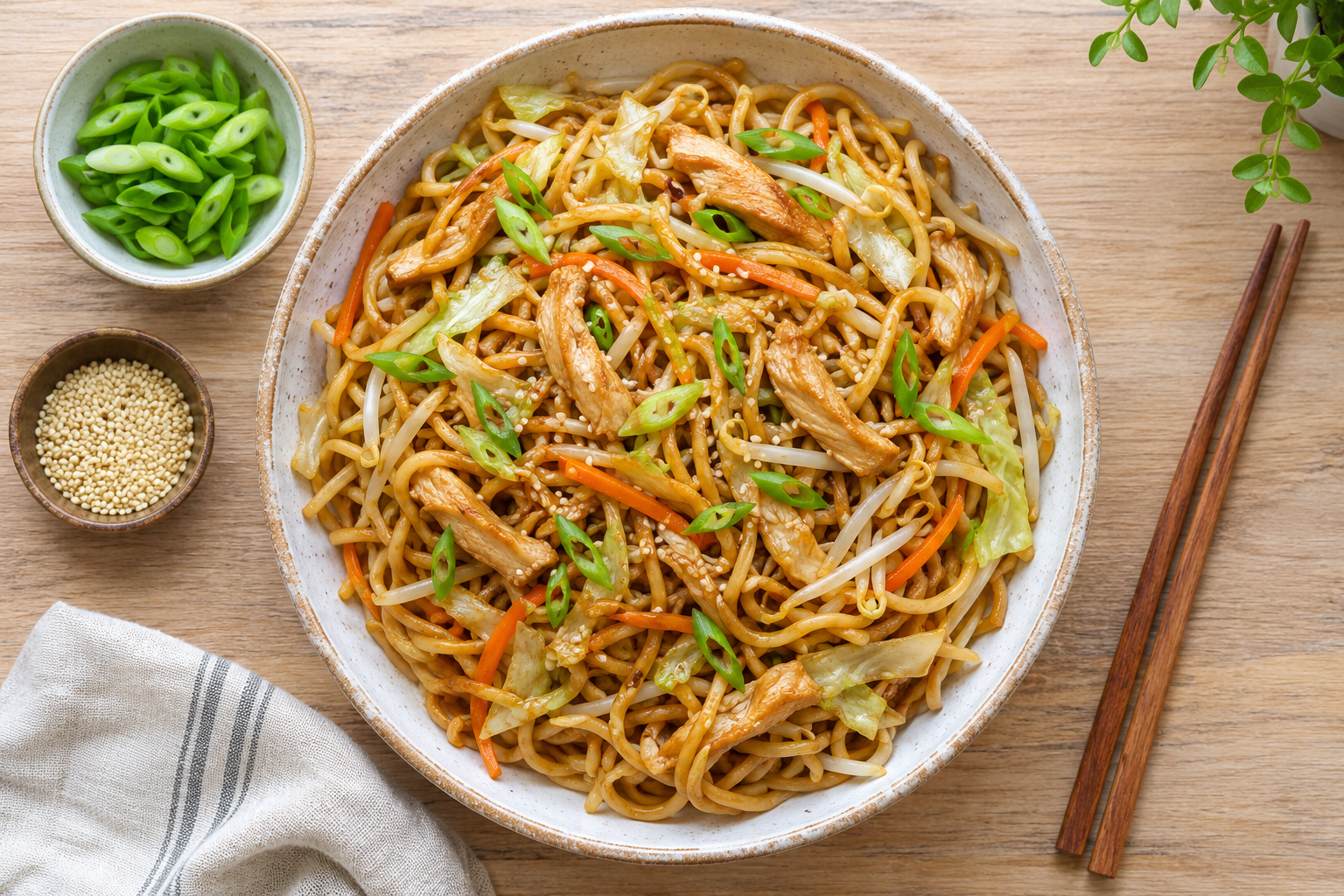
Chow mein is best eaten fresh, but leftovers keep well in an airtight container for up to 3 days. Reheat them in a skillet over medium heat with a small splash of water to loosen the noodles. The microwave works too, though the noodles will lose some crispness.
For a complete meal, serve chow mein with steamed dumplings, a simple cucumber salad, or hot tea. It also works well as a side dish alongside baked chicken, grilled fish, or vegetable spring rolls. The flavors are mild enough for family dinners while still tasting like a favorite Asian dish.
FAQs About Easy Chow Mein
What is the difference between chow mein and lo mein?
Chow mein means stir-fried noodles and is usually cooked at high heat until lightly crisp. Lo mein noodles are generally softer and tossed with a thicker, saucier mixture. [1][2]
Can I make this easy chow mein recipe ahead of time?
You can chop the vegetables and mix the sauce earlier in the day. Cook the noodles just before serving for the best texture.
Do I need a wok?
No. A large, heavy skillet works well. The important part is giving the noodles enough space to fry rather than steam.
Can I use ramen noodles?
Yes, but discard the seasoning packet and cook the noodles only until barely tender. They will not crisp quite like chow mein noodles, but they still work in a pinch.
How do I keep the vegetables crunchy?
Cook them briefly and add delicate vegetables, such as bean sprouts and green onions, near the end.
Is chow mein healthy?
It can be part of a balanced meal, especially when made with plenty of vegetables and a moderate amount of sauce. Adjust the oil and sodium-containing sauces to suit your preferences.
Can I freeze chow mein?
Freezing is possible, but the noodles may become softer after thawing. For the best texture, refrigerate leftovers instead and reheat them in a skillet.
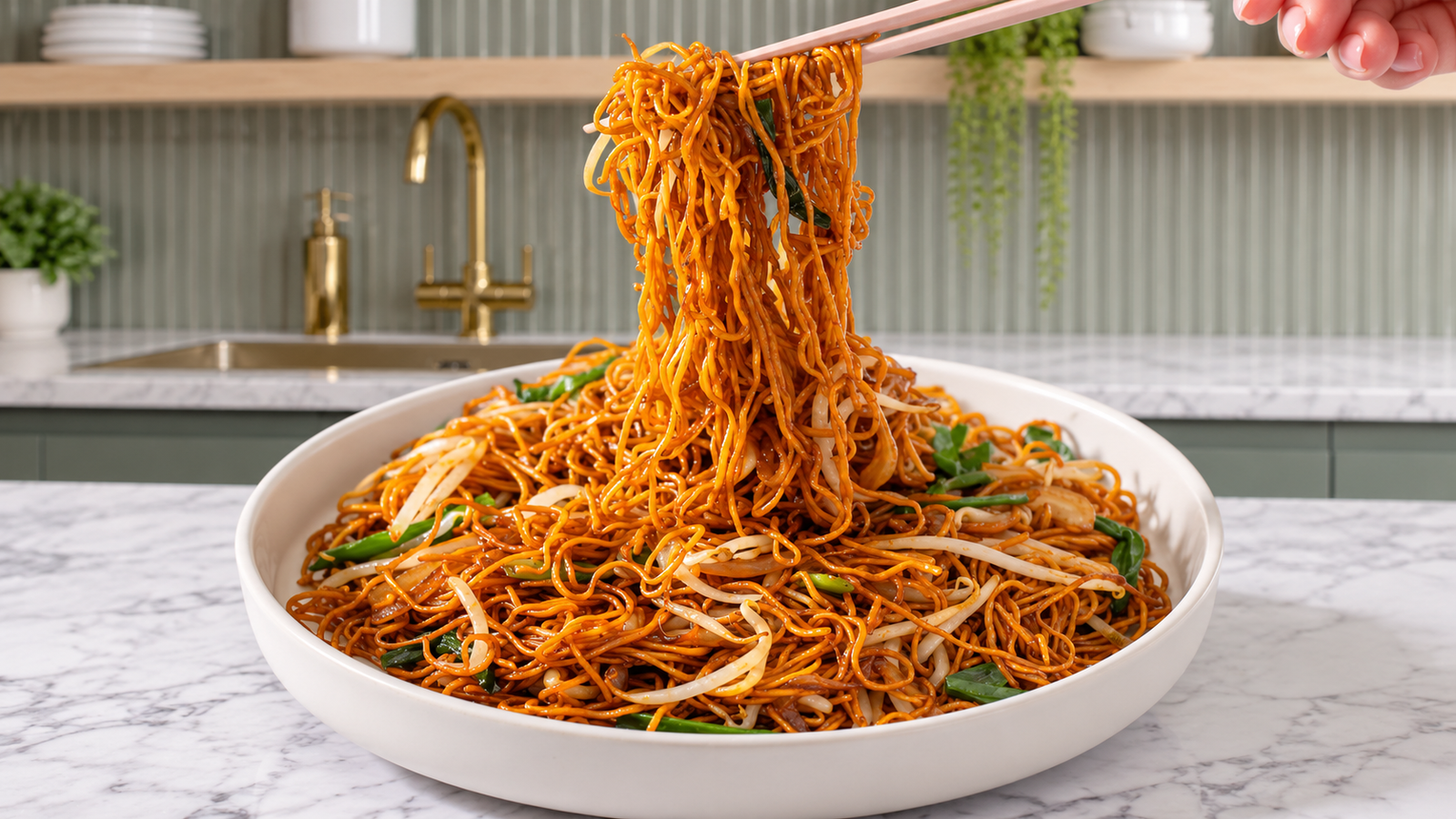

Easy Chow Mein
Ingredients
Equipment
Method
- Cook or soak the chow mein noodles according to their type, then rinse under cold water and drain thoroughly.
- Whisk the light soy sauce, dark soy sauce, oyster sauce, sesame oil, sugar, pepper, and water in a small bowl.
- Heat 1 tablespoon of oil in a large skillet over medium-high heat. Pan-fry the noodles for 2 to 3 minutes until lightly golden and crisp, then transfer them to a plate.
- Add the remaining oil and cook the garlic for 10 seconds until fragrant.
- Add the cabbage and carrot. Stir-fry for 1 to 2 minutes, until the cabbage begins to soften but remains crisp.
- Add the bean sprouts and white parts of the green onions. Cook for 30 seconds.
- Return the noodles to the pan, pour in the sauce, and toss for 1 to 2 minutes until coated and glossy.
- Turn off the heat, stir in the green onion tops, and serve immediately.
Notes
- Use a large pan so the noodles fry instead of steam.
- For a vegetarian version, replace oyster sauce with mushroom stir-fry sauce or hoisin sauce.
- Add cooked chicken, shrimp, or tofu for extra protein.
- Keep the heat high but watch the garlic closely to prevent burning.


