
Made From Scratch: A Sweet and Savory Tomato Jam Recipe That’ll Change Your Summer is the answer to an overflowing tomato basket. Ripe tomatoes cook down with brown sugar, apple cider vinegar, onion, ginger, and warm spices until they become glossy, thick, and spreadable.
This is not a traditional fruit jam and it is not ketchup. The flavor lands between sweet preserves, chutney, and a deeply concentrated tomato relish. Spoon it over goat cheese, tuck it into grilled cheese, spread it on burgers, or add a jar to a summer snack board.
Important: This recipe is designed for refrigerator or freezer storage, not shelf-stable water-bath canning. Safe canned tomato jam requires a research-tested formula and exact processing directions; a full explanation appears below.
Why You Will Love This Homemade Tomato Jam
- Big summer flavor: Slow reduction concentrates ripe tomatoes without turning them into pasta sauce.
- Sweet and savory: Brown sugar balances vinegar, ginger, onion, and spices.
- No pectin: The jam thickens naturally as moisture evaporates.
- Versatile condiment: Serve it with cheese, eggs, sandwiches, grilled vegetables, or meat.
- Freezer friendly: Small portions preserve summer tomatoes without home-canning equipment.
What Does Tomato Jam Taste Like?
Tomato jam begins with the bright acidity and natural sweetness of fresh tomatoes. Brown sugar adds caramel notes, while apple cider vinegar keeps the finished spread lively. Ginger, cumin, smoked paprika, and red pepper give it warmth without turning it into a hot sauce.
The texture should be soft and spoonable, with small pieces of tomato and onion suspended in a syrupy base. It is thick enough to stay on toast, but it should not become rubbery or candy-like after cooling.
Ingredients You Will Need
Fresh Tomatoes
Use ripe Roma, plum, or other meaty tomatoes when possible. They contain less water and fewer seed pockets than large slicing tomatoes, so the jam reduces faster. Garden tomatoes work beautifully as long as they are sound and not overripe or damaged.
Brown Sugar
Brown sugar provides sweetness and a subtle molasses note. Three-quarters of a cup makes a savory-leaning jam rather than a candy-sweet preserve. Do not reduce it drastically, because it also contributes to the glossy texture.
Apple Cider Vinegar and Lemon Juice
Apple cider vinegar gives the jam a rounded, fruity acidity. Bottled lemon juice supplies consistent sharpness and brightens the tomatoes. In this refrigerator recipe they are included for flavor and balance; they do not automatically make an untested recipe safe for shelf storage.
Onion, Ginger, and Spices
Finely diced onion melts into the tomatoes as they cook. Fresh ginger adds a warm lift, while cumin and smoked paprika make the jam savory. A small amount of crushed red pepper is optional but helps balance the sugar.
How to Make Tomato Jam
1. Prepare the Tomatoes
Core the tomatoes and chop them into roughly half-inch pieces. Peeling is optional for this refrigerator version. For a smoother homemade jam with fresh tomatoes, blanch and peel them first. Keep the juices released while chopping because they help dissolve the sugar and start the cooking process.
2. Combine Everything
Add the tomatoes, onion, brown sugar, vinegar, bottled lemon juice, ginger, cumin, smoked paprika, salt, black pepper, and red pepper flakes to a wide, heavy saucepan. Stir well and let the mixture stand for five minutes so the tomatoes begin releasing liquid.
3. Bring to a Gentle Boil
Set the pan over medium-high heat and bring the mixture to a gentle boil, stirring often. Reduce the heat to maintain a steady simmer. Avoid a violent boil, which can scorch the sugar before the tomatoes have time to soften.
4. Reduce Until Thick
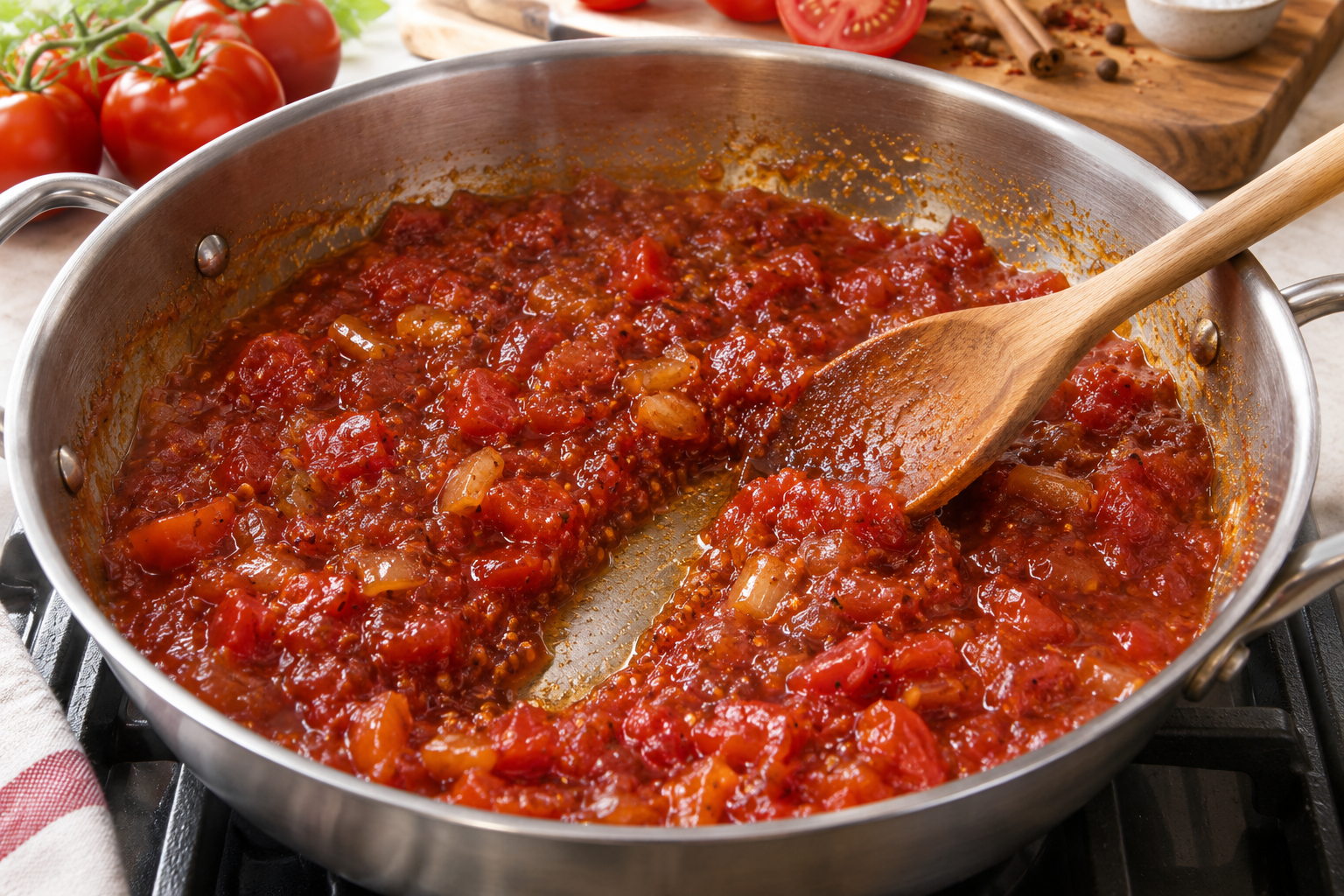
Simmer uncovered for 60 to 80 minutes. Stir every 10 minutes at first, then every few minutes as the liquid evaporates. Scrape the bottom and corners of the pan with a heatproof spatula to prevent sticking.
5. Check the Consistency
Drag a spoon across the bottom of the pan. The path should stay visible for a second or two before slowly filling. Place a teaspoon on a cold plate; when cooled, it should mound rather than run. Stop cooking while it is slightly looser than you want because it thickens as it cools.
6. Cool and Store
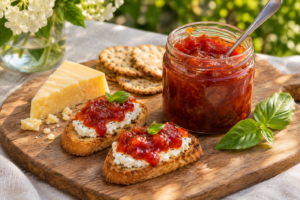
Spoon the hot jam into clean heat-safe jars or containers, leaving space at the top. Cool briefly, cover, and refrigerate. This is homemade tomato jam in a jar, but the jar is for refrigerator storage rather than pantry storage.
How to Know When Tomato Jam Is Done
Cooking time changes with tomato variety, pan width, heat level, and the amount of water in the fruit. Watch the texture rather than the clock. Finished jam looks shiny and leaves a temporary path when stirred. It should not have a watery ring around the edges.
If it is still thin after an hour, continue simmering. Do not add cornstarch or flour. They create a pasty texture, and thickeners are also inappropriate additions to home-canning recipes because they change heat penetration.
Safe Storage: Refrigerator, Freezer, or Canning?
Refrigerator: Keep this batch in clean covered containers for up to 10 days. Always use a clean spoon and discard the jam if you notice mold, fermentation, an off odor, or a bulging lid.
Freezer: For a tomato freezer jam recipe, portion the cooled jam into freezer-safe containers, leave about one inch of headspace, and freeze for up to three months. Thaw overnight in the refrigerator.
Shelf-stable canning: Do not water-bath can this recipe. Tomatoes vary in acidity, and onion is a low-acid ingredient. The National Center for Home Food Preservation says its canning recommendations must be followed as written because ingredient and method changes can affect safety. For canned tomato jam, use a tested recipe such as the NCHFP Spiced Tomato Jam and follow its tomato preparation, acid, sugar, pectin, jar size, headspace, processing time, and altitude adjustments exactly.
If you are specifically looking for a canned tomato jam recipe or savory jams for canning, do not treat a refrigerator recipe as interchangeable with a tested formula. Adding extra lemon juice or checking a single jar with casual pH paper is not a substitute for a validated process.
Ways to Use Sweet Savory Tomato Jam
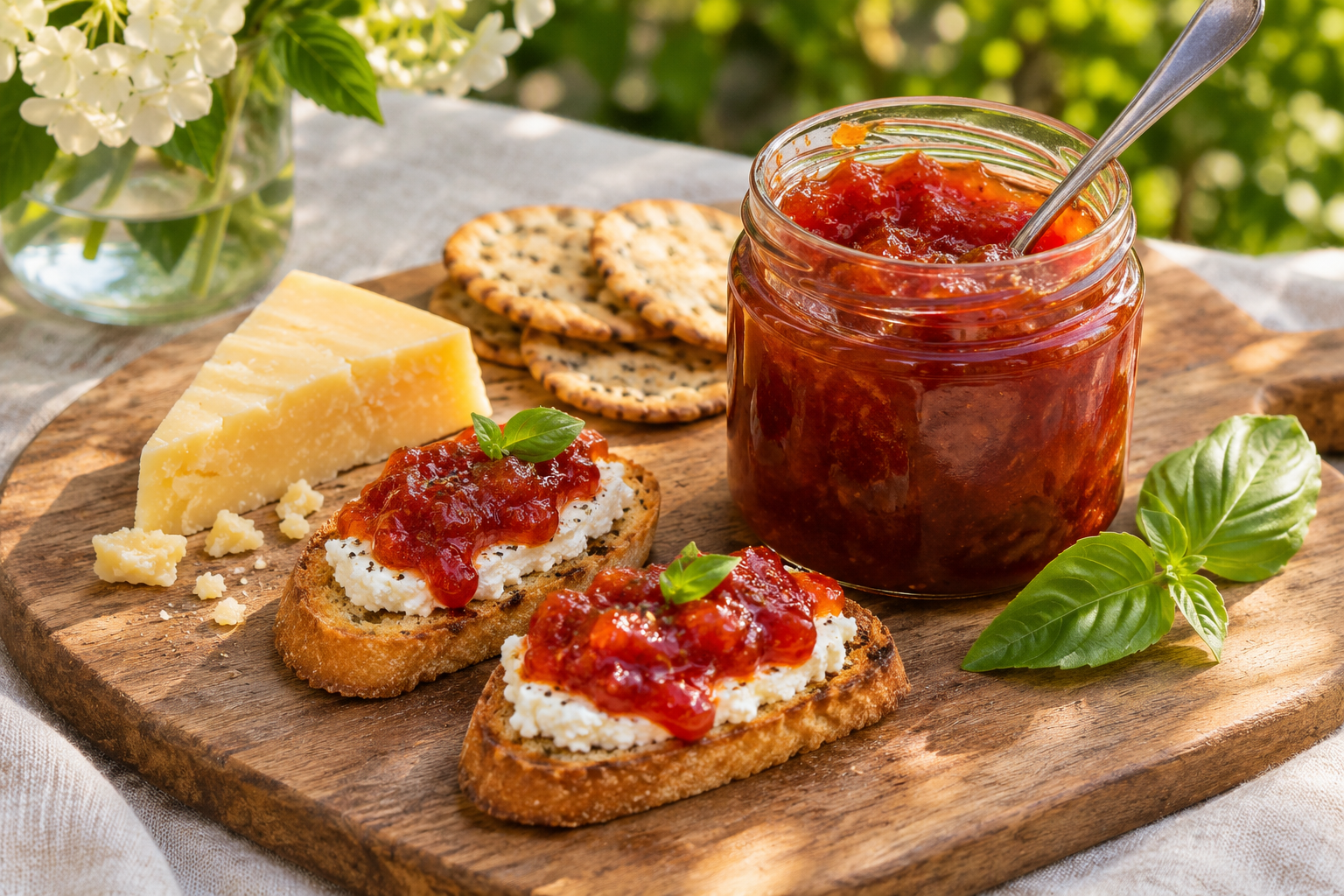
Spread it on grilled cheese, turkey sandwiches, veggie burgers, or breakfast toast. Spoon it beside scrambled eggs, frittatas, roasted potatoes, or grilled vegetables. It is especially good with goat cheese, cream cheese, brie, sharp cheddar, and salty feta.
For an appetizer, top crostini with whipped ricotta and a teaspoon of jam. Brush a small amount over roasted salmon or chicken near the end of cooking. You can also stir a spoonful into vinaigrette or use it to add sweet acidity to a grain bowl.
Easy Flavor Variations
Herb tomato jam: Stir in chopped fresh basil after the pan comes off the heat.
Spicy tomato jam: Double the red pepper flakes or add a finely minced jalapeño. Keep this variation refrigerated or frozen.
Smoky tomato jam: Increase smoked paprika to one teaspoon.
Ginger-forward jam: Add an extra teaspoon of grated ginger for a brighter finish.
Frequently Asked Questions
Can I use cherry tomatoes?
Yes. Halve them and expect a longer cooking time because many cherry varieties are juicy. Their skins will remain visible unless you pass the finished jam through a food mill.
Can I use canned tomatoes?
For this refrigerator recipe, drained whole canned tomatoes can work when fresh tomatoes are out of season. The flavor and texture will be different, and the reduction time may change. Do not make that substitution in a tested canning recipe unless the source specifically permits it.
Why is my tomato jam watery?
It needs more uncovered simmering time. A wide pan speeds evaporation, and frequent stirring near the end prevents scorching.
Can I double the batch?
Use two pans rather than one deep pot. A very large batch evaporates slowly and may cook unevenly.

Sweet and Savory Tomato Jam
Ingredients
Equipment
Method
- Add the chopped tomatoes and their juices, onion, brown sugar, vinegar, bottled lemon juice, ginger, cumin, smoked paprika, salt, black pepper, and red pepper flakes to a wide heavy saucepan. Stir and let stand for 5 minutes.
- Set the pan over medium-high heat and bring to a gentle boil, stirring often. Reduce the heat to maintain a steady uncovered simmer.
- Cook for 60 to 80 minutes, stirring every 10 minutes at first and more frequently as the mixture thickens. Scrape the bottom and corners to prevent scorching.
- The jam is ready when a spoon dragged across the pan leaves a path for 1 to 2 seconds and a teaspoon placed on a cold plate mounds instead of running.
- Spoon into clean heat-safe jars, leaving space at the top. Cool briefly, cover, and refrigerate. The jam thickens further as it cools.
Notes
- This is a refrigerator or freezer recipe. Do not water-bath can it.
- Refrigerate for up to 10 days and always use a clean spoon.
- Freeze in freezer-safe containers with 1 inch of headspace for up to 3 months.
- For shelf-stable tomato jam, follow a research-tested USDA, NCHFP, or university extension recipe exactly.